Housekeeping Practices and Their Impact on Health and Well-Being in The Hospitality Industry (SDG 3)
Keywords:
Housekeeping practices, employee well-being, occupational health and safety, guest satisfaction, hotel performance, ergonomic practices, sustainable hospitality, SDG 3 (good health and well-being)Abstract
Housekeeping is a critical function in the hospitality industry, contributing significantly to cleanliness, hygiene, guest satisfaction, and overall service quality. However, the physically demanding nature of housekeeping work exposes employees to occupational hazards such as musculoskeletal disorders, chemical exposure, fatigue, and psychological stress, which can negatively affect their well-being. Aligned with Sustainable Development Goal (SDG) 3: Good Health and Well-Being, this study examines the relationship between housekeeping practices and the physical and mental well-being of housekeeping staff, as well as their impact on guest satisfaction and hotel performance. A quantitative cross-sectional design was employed using a structured questionnaire distributed electronically to housekeeping employees, hotel managers, and hotel guests. Utilizing non-probability convenience sampling, the study analyzed responses from N = 293 participants to capture diverse perspectives on housekeeping operations. Data were evaluated using descriptive and inferential statistics, including correlation analysis and group comparisons. The study evaluates hygiene standards, ergonomic practices, safety training, personal protective equipment (PPE) compliance, workload management, and sustainability initiatives. The empirical findings reveal that effective housekeeping practices—supported by ergonomic tools, safety training, and adequate PPE provision—significantly improve employee well-being, mitigate workplace hazards, and foster enhanced guest satisfaction and operational efficiency. The study provides actionable recommendations for designing safer, healthier, and more sustainable housekeeping environments while directly supporting SDG 3.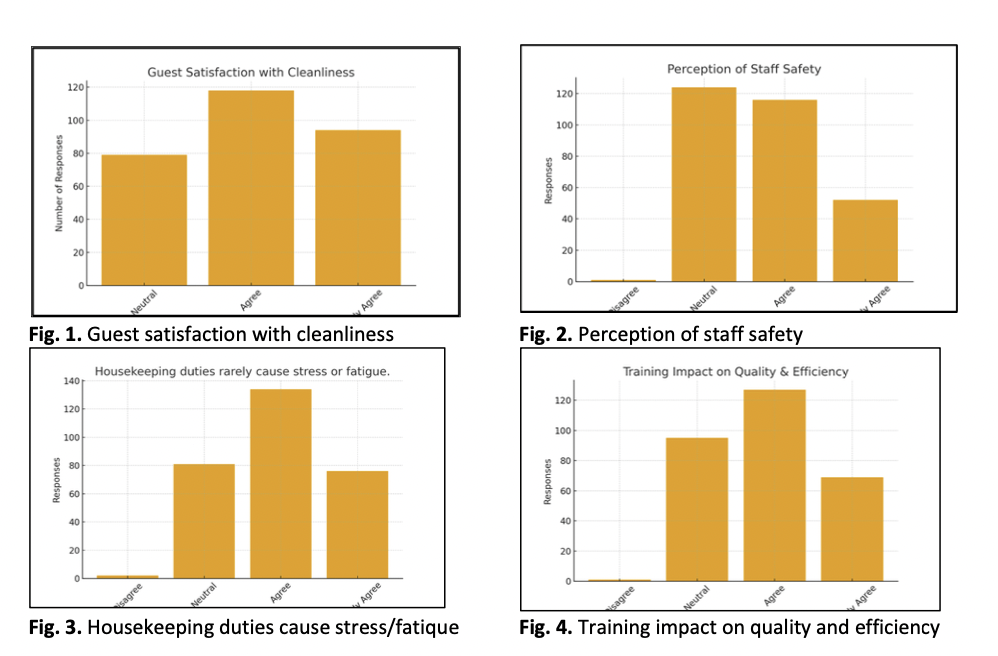
Downloads
Published
2026-10-09
How to Cite
Hirusha Gaurawa Patabandi Arachchige, & Mohd Shahril Mat Yusoff. (2026). Housekeeping Practices and Their Impact on Health and Well-Being in The Hospitality Industry (SDG 3). Semarak International Journal of Future Tourism and Hospitality Management, 6(1), 1–8. Retrieved from https://semarakilmu.my/index.php/sijfthm/article/view/728
Issue
Section
Articles