Tahap Pengetahuan, Kesedaran dan Aplikasi Prinsip Pengurusan Halal dalam Rantaian Bekalan di Kalangan Pelajar Logistik Politeknik Nilai
Level of Knowledge, Awareness, and Application of Halal Management Principles in the Supply Chain among Logistics Students at Politeknik Nilai
Keywords:
Pengurusan halal, rantaian bekalan halal, pengetahuan pelajar, kesedaran logistik halal, aplikasi prinsip halal , Halal management, halal supply chain, student knowledge, halal logistics awareness, application of halal principlesAbstract
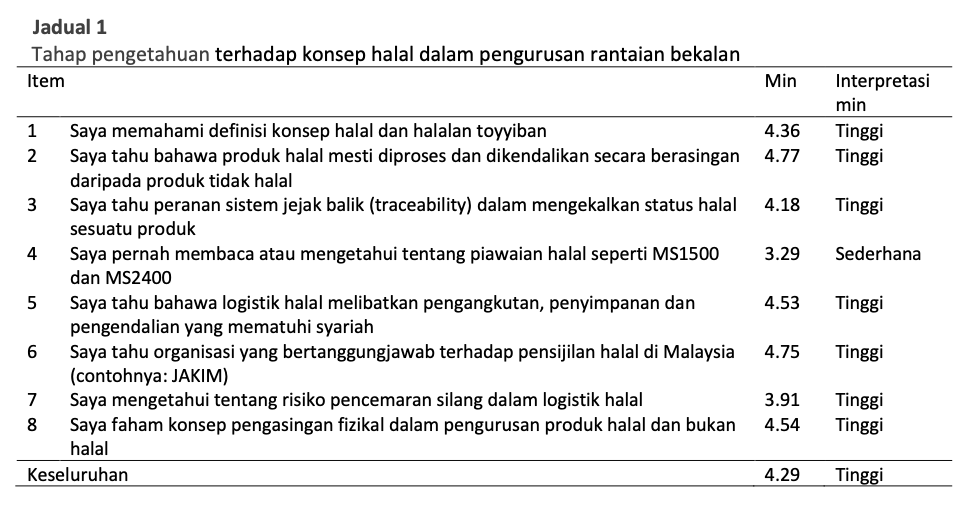
Kajian ini bertujuan untuk menilai tahap pengetahuan, kesedaran, dan aplikasi prinsip halal dalam kalangan pelajar Diploma Pengurusan Logistik dan Rantaian Bekalan di Politeknik Nilai terhadap pengurusan halal dalam rantaian bekalan. Kepentingan pengurusan halal kini semakin ketara seiring dengan pertumbuhan pesat industri halal global yang menuntut pematuhan syariah dan piawaian ketat. Justeru, tenaga kerja masa hadapan perlu dipersiapkan dengan kefahaman dan kompetensi yang sepadan agar dapat memenuhi kehendak industri yang semakin kompleks dan berdaya saing. Kajian ini menggunakan pendekatan kuantitatif dengan kaedah tinjauan soal selidik yang melibatkan seramai 198 responden yang dipilih secara rawak mudah daripada populasi pelajar. Data dianalisis menggunakan statistik deskriptif menerusi perisian SPSS versi 25, dengan fokus kepada min skor untuk menentukan tahap pengetahuan, kesedaran, dan aplikasi prinsip halal. Hasil kajian menunjukkan bahawa tahap pengetahuan pelajar berada pada tahap tinggi (min = 4.29), begitu juga tahap kesedaran (min = 4.66) dan tahap aplikasi prinsip halal dalam pembelajaran serta latihan industri (min = 4.29). Walau bagaimanapun, kelemahan dikenal pasti dalam aspek pengetahuan terhadap piawaian teknikal halal seperti MS1500 dan MS2400. Dapatan ini mencadangkan keperluan untuk penambahbaikan dalam kurikulum dan latihan industri agar lebih menekankan komponen halal secara praktikal dan sistematik. Kajian ini memberikan implikasi penting kepada institusi TVET dalam merangka strategi pendidikan yang lebih menyeluruh bagi melahirkan tenaga kerja logistik yang beretika, profesional, dan berdaya saing dalam sektor halal.
This study aims to assess the level of knowledge, awareness, and application of halal principles among students of the Diploma in Logistics and Supply Chain Management at Nilai Polytechnic towards halal management in the supply chain. The importance of halal management is now becoming increasingly apparent in line with the rapid growth of the global halal industry which demands strict Syariah compliance and standards. Therefore, the future workforce needs to be prepared with the corresponding understanding and competencies in order to meet the needs of the increasingly complex and competitive industry. This study uses a quantitative approach with a questionnaire survey method involving 198 respondents who were selected randomly from the student population. The data was analysed using descriptive statistics through SPSS version 25 software, with a focus on the mean score to determine the level of knowledge, awareness, and application of halal principles. The results of the study showed that the level of knowledge of students was at a high level (mean = 4.29), as was the level of awareness (mean = 4.66) and the level of application of halal principles in learning and industrial training (mean = 4.29). However, weaknesses were identified in the aspect of knowledge of halal technical standards such as MS1500 and MS2400. These findings suggest the need for improvements in curriculum and industry training to emphasize halal components in a practical and systematic manner. This study provides important implications for TVET institutions in formulating a more comprehensive education strategy to produce an ethical, professional, and competitive logistics workforce in the halal sector.