The Effectiveness of the Carousel Method in Enhancing Students’ Understanding and Engagement in Lower Secondary Islamic Education
Keywords:
Carousel Method, active learning, Islamic education, Sirah (Prophet Muhammad SAW)Abstract
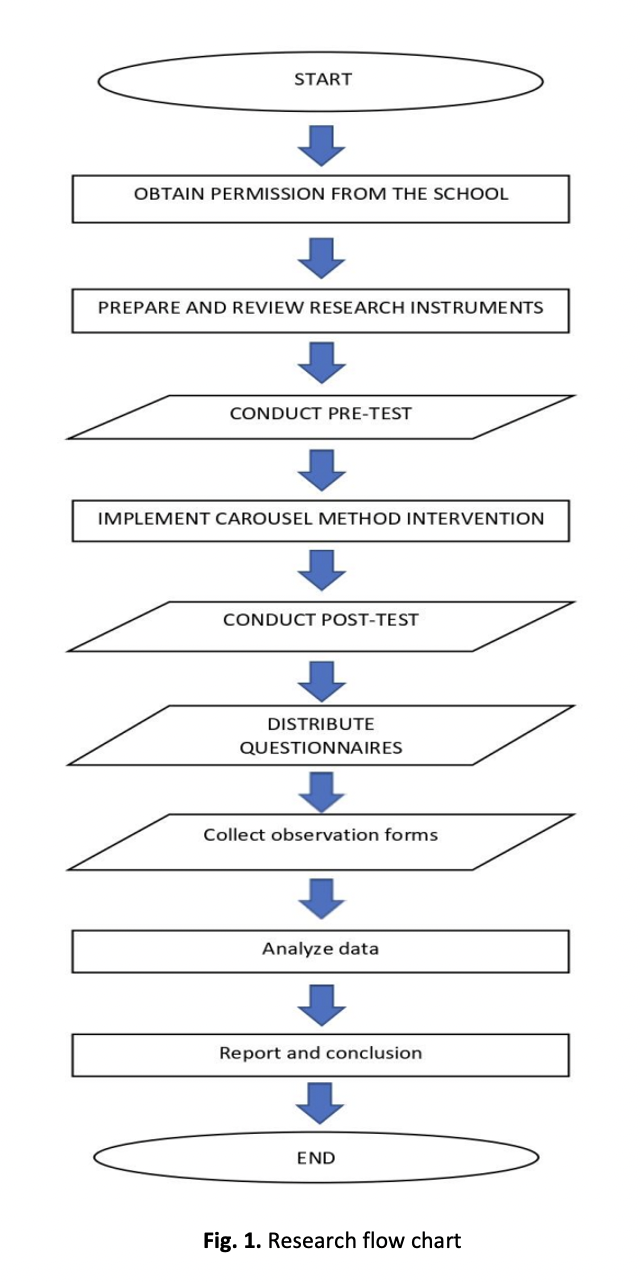
The Carousel Method is an active learning strategy designed to address challenges in Islamic Education at the lower secondary level, where conventional approaches often result in limited comprehension, passive participation, and student disengagement. This study employed a mixed-methods design, combining qualitative and quantitative approaches to evaluate the effectiveness of the method. Research instruments included pre- and post-tests, questionnaires administered to 30 students from a lower religious secondary school in Besut, and structured observation checklists to ensure a holistic assessment of learning outcomes. The Carousel activity was implemented through five learning stations, each focusing on a specific Sirah (Prophet Muhammad SAW) subtopic. Students rotated across stations to read materials, assess tasks, collaborate with peers, contribute ideas, and complete scaffolded exercises designed to progressively measure comprehension. This rotational process sustained student focus and encouraged active physical and cognitive engagement, thereby reducing the static nature of traditional learning that often hinders participation. Findings from the pre- and post-test scores revealed that 90% of students demonstrated improvement following the implementation of the Carousel Method, 6.7% maintained their performance, and only 3.3% recorded a decline. These results highlight the method’s effectiveness in enhancing student engagement and achievement. Beyond academic gains, the Carousel Method fostered improvements in interest, group collaboration, self-confidence, and factual recall in Sirah. Teachers also benefited from clearer insights into student understanding through stationbased tasks, supporting more authentic and valid assessment practices. Overall, the study demonstrates that the Carousel Method has strong potential to serve as a catalyst for more dynamic, inclusive, and experiential teaching and learning practices in Islamic Education. By shifting the focus from teacher-centered instruction to student-centered exploration, the method promotes active participation and deeper comprehension. Proposed enhancements include the integration of interactive digital tools, differentiated tasks across varying levels of complexity, and audio-visual resources to accommodate diverse learning styles. These improvements would further strengthen the pedagogical effectiveness of the Carousel Method, ensuring that Islamic Education becomes more engaging, meaningful, and aligned with contemporary educational needs.