Maximizing Light Coupling Efficiency via LSPR Effect using AuNP-Coated Angle-Cleaved Fiber Probe for Optical Microscopy Application
Keywords:
Angle- cleaved fiber probe, localized surface plasmon resonance (LSPR), coupling efficiency, gold nanoparticlesAbstract
The development of optical microscopy technology such as near field microscopes crucially relies on excellent efficiency of light coupling. This study investigates the effect of fiber optic probe’s cleaved angle on light coupling efficiency by incorporating propagating surface plasmon resonance (SPR) and localized surface plasmon resonance (LSPR) phenomena using platinum thin film and gold nanoparticles respectively. The fabrication process started by fabricating the angle-cleaved fiber probes with various angles ranging from 40.08° to 71.00° using heat-and-pull and cleaving techniques. To determine their coupling efficiency performance, a multimode fiber was acted as a transmitter, meanwhile the angle-cleaved probes were functioned as a receiver of specifically a light coupler. Two types of noble metal, namely gold nanoparticles (AuNP) and platinum thin film (Pt) were coated onto the probe to generate SPR for the coupling efficiency enhancement. The effects of significant factors such as cleaved-angle, operation wavelengths and types of metal; to the coupling efficiency were studied. It was found that the application of gold nanoparticles resulted in a noticeable increase in light coupling efficiency that exceeding 90%, demonstrating their effectiveness in LSPR enhancement. We noticed that the deployment of a greater cleaved angle at 71.00° resulted in the greatest coupling efficiency due to the reduction of back-reflection loss indicating the crucial fiber structure in light coupling. Introducing gold nanoparticles as LSPR material resulted in a more stable and enhanced coupling efficiency response compared to platinum. In conclusion, the enhanced localized surface plasmon resonance (LSPR) effect produced a significant evanescent field that was able to improve optical confinement. These findings highlight a cost-effective and scalable approach for developing high sensitivity probe with strong potential applications, especially in optical microscopy fields.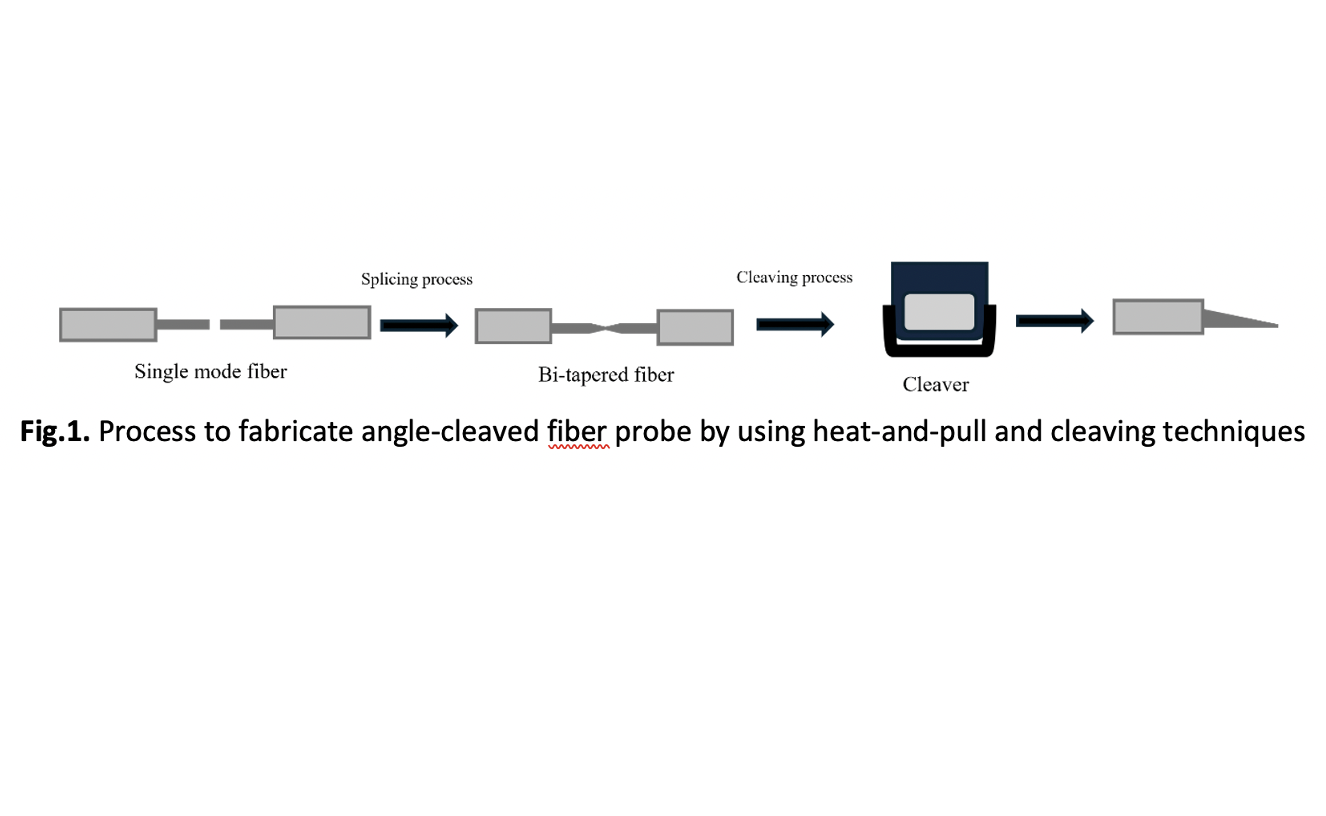
Downloads
Published
2026-02-21
How to Cite
Ahmad Zahidi, N. A. A., Mukhtar, W. M., Somthong, T., Mohd Halim, R., Mohd Taib, N. A., & Abdul Rashid, A. R. (2026). Maximizing Light Coupling Efficiency via LSPR Effect using AuNP-Coated Angle-Cleaved Fiber Probe for Optical Microscopy Application. Semarak International Journal of Electronic System Engineering, 9(1), 1–12. Retrieved from https://semarakilmu.my/index.php/sijese/article/view/989
Issue
Section
Articles