A Comprehensive Review on Road Signboards Design Placement and Impact
Keywords:
Road signboard, traffic sign, design and placement, road safety, systematic reviewAbstract
Road signboards played a critical role in road safety and traffic management by providing information, warnings, and guidance to road users. The expansion of transportation networks increased the demand for signboards that were clear, visible, and effective across diverse traffic environments. Previous studies examined signboard design, placement, and technological development largely in isolation, which limited understanding of how these elements collectively influenced road safety and user behaviour. This gap highlighted the need for a more comprehensive examination of road signboard effectiveness. This study aimed to review recent research on road signboard design, placement, and impact, with specific attention given to the application of intelligent systems and infrastructure. A systematic literature review was conducted in accordance with the PRISMA guidelines. Relevant journal articles were retrieved from the Scopus and ScienceDirect databases, and a structured screening process led to the selection of 32 eligible studies published between 2022 and 2025. The findings showed that sensing technologies and machine-learning approaches improved traffic sign detection and recognition, although their performance was influenced by data quality, environmental conditions, and regional variation. Signboard design and placement characteristics such as visibility, readability, and information load were found to strongly affect user comprehension and compliance. The review also indicated that intelligent infrastructure and supportive policy measures enhanced the effectiveness of road sign systems, particularly in complex traffic environments. In conclusion, the effectiveness of road signboards was shaped by the interaction between technological capability, human factors, and infrastructure planning. Improving road safety therefore required an evidence-based approach that considered these elements together within traffic system design and implementation.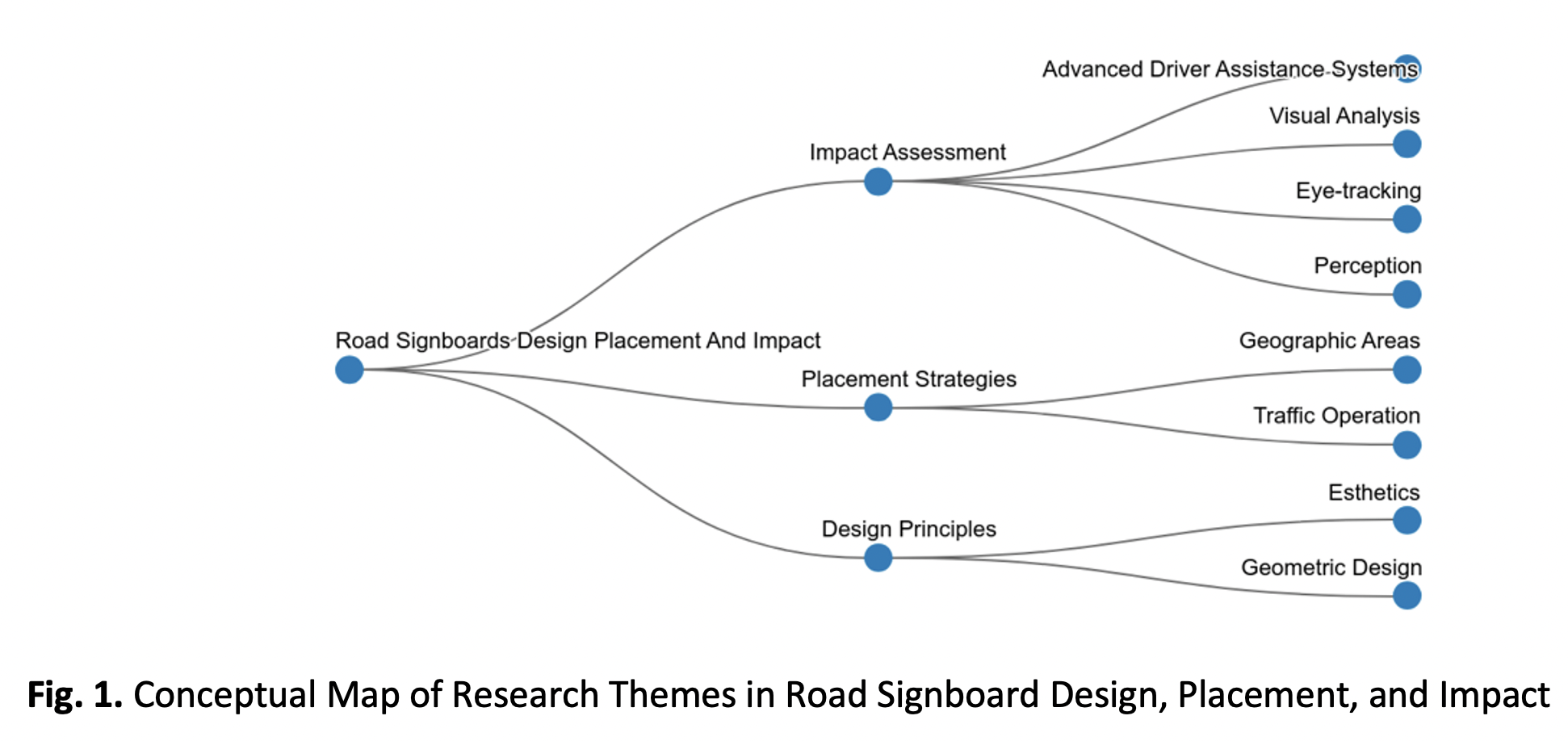
Downloads
Published
2026-04-20
How to Cite
Polly, H., Ribi, J., & Hanis Ali, M. (2026). A Comprehensive Review on Road Signboards Design Placement and Impact. Semarak International Journal of Civil and Structural Engineering, 8(1), 19–35. Retrieved from https://semarakilmu.my/index.php/sijcse/article/view/1046
Issue
Section
Articles