Circle Time: Boosting Social and Emotional Competence in University Students
Keywords:
Circle Time, social-emotional development, university students, perception, higher education, emotional well-being, social skillsAbstract
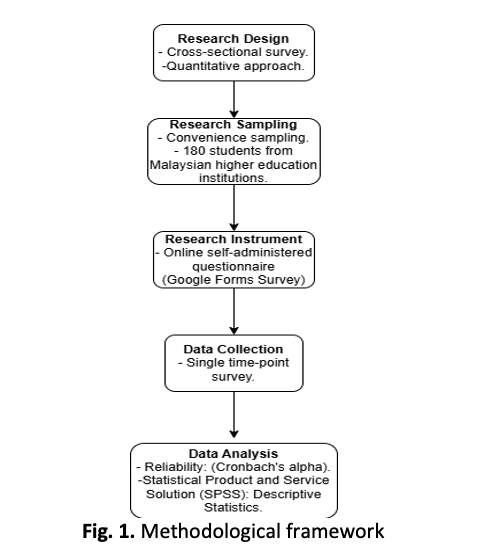
This study investigates the knowledge, perceptions, and socio-emotional outcomes associated with the implementation of Circle Time among university students in Malaysia. Although Circle Time is traditionally used in school settings, its application in higher education remains underexplored. Using a cross-sectional quantitative design, data were collected from 180 students through an online questionnaire assessing knowledge, perception, social outcomes, and emotional outcomes related to Circle Time. Reliability analysis showed acceptable to excellent internal consistency across all constructs, confirming the suitability of the instrument. Descriptive results indicated high levels of perceived effectiveness, particularly in social and emotional domains. Pearson correlation analysis revealed strong, positive, and statistically significant relationships between students’ perceptions and both social (r = .741, p = .01) and emotional outcomes (r = .766, p = .01), as well as between social and emotional outcomes (r = .771, p = .01). These findings suggest that positive perceptions of Circle Time contribute to enhanced percieved socio-emotional outcomes, highlighting its potential as a supportive intervention for university students. The study addresses a research gap by providing preliminary, perception-based evidence on the potential role of Circle Time in supporting student well-being and interpersonal development in higher education.