Between Silence and Anxiety: Exploring The Psychological Landscape of ESL/EFL Learners in Universities in Malaysia and Indonesia
Keywords:
Foreign language anxiety, classroom silence, multilingual learnersAbstract
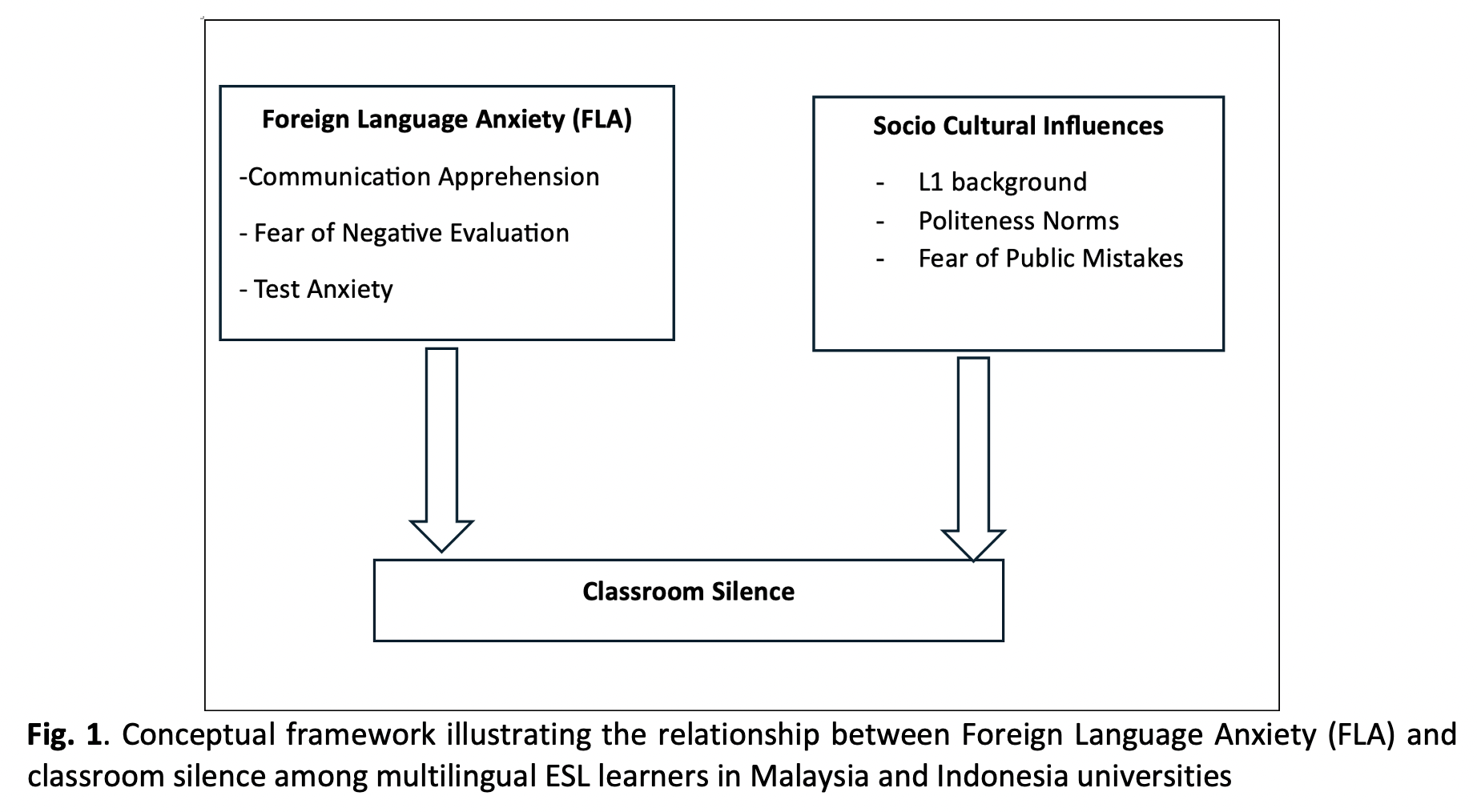
In multilingual university classrooms across Malaysia and Indonesia, English is commonly used as a medium of instruction. While English is considered a second language in Malaysia, it is taught as a foreign language in Indonesia. Despite its prominence in academic settings, many ESL/EFL learners in both countries continue to experience emotional and psychological challenges, particularly during English-speaking activities. One of the most critical but often overlooked issues is classroom silence, which may not stem from a lack of ability but from underlying anxiety and discomfort. Although previous studies have explored speaking anxiety in language learning, limited research has examined how such anxiety influences verbal participation in multilingual Southeast Asian classrooms. This study investigates the relationship between foreign language anxiety and classroom silence among ESL/EFL undergraduate students in Malaysia and Indonesia. The primary aim is to identify how anxiety contributes to learners’ decisions to remain silent during English-speaking activities and to compare these patterns across two distinct sociolinguistic settings. A total of 51 undergraduate ESL/EFL learners participated in the study. Data were collected through a self-administered online questionnaire using a five-point Likert scale. Quantitative data were analysed using descriptive statistics, Pearson correlation, and independent samples t-tests. The results show that most participants reported moderate to high levels of anxiety, particularly related to pronunciation, limited vocabulary, and fear of negative evaluation. A significant positive correlation was found between anxiety and classroom silence. Although Indonesian learners reported slightly higher anxiety and silence levels, the differences between the two groups were not statistically significant. The findings suggest that classroom silence is not merely a behavioural issue, but one deeply rooted in learners’ emotional and cultural experiences. The study concludes that educators should adopt psychologically informed teaching strategies that reduce anxiety and encourage active participation in English-speaking tasks within multilingual undergraduate learning environments.