Evaluation of Solar Irradiation and Energy Production of a Photovoltaic System on Bawean Island using Pyranometer Measurements and PVsyst Simulation
Keywords:
Solar irradiation, photovoltaic system, PVsyst simulation, performance ratio, specific yield, Bawean IslandAbstract
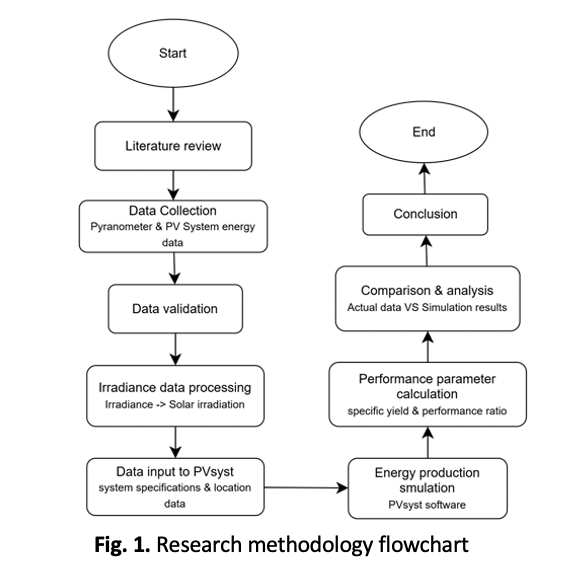
The increasing demand for electrical energy and the importance of transitioning to renewable energy sources have driven the development of solar photovoltaic (PV) systems, particularly in island regions with limited access to the electricity grid. This study analyzes the solar radiation characteristics and energy production effectiveness of a PV system installed on Bawean Island, East Java, Indonesia, by combining pyranometer field measurements with simulations conducted using PVsyst. The primary objective is to compare the performance of the simulated system with the actual system and identify key factors influencing energy output variations. Data collected during January 2026 included daily solar radiation readings from pyranometers and energy production data from a 408.24 kWp PV system featuring three Sungrow SG110CX inverters. Solar radiation values were calculated from the daily average irradiance, while system performance was assessed using specific yield and performance ratio (PR) as key metrics. The PVsyst simulations used Meteonorm meteorological information to model the system under optimal conditions. During the observation period, the actual PV system produced a total of 24,326.7 kWh, averaging 261.6 kWh per day, with an average irradiance of 344.6 W/m². The simulation showed an expected annual energy output of 681,545 kWh, a specific yield of 1,669 kWh/kWp/year, and a performance ratio of 84.09%, reflecting strong system efficiency in the ideal scenario. A comparison of the simulated and actual data for January shows a discrepancy of approximately 37.5%, largely due to the use of long-term synthetic meteorological data in PVsyst rather than current weather variations, such as cloud cover and rainfall. Other influencing factors include losses due to temperature variations, changes in inverter efficiency, and periods of system downtime that were not accounted for. A scatterplot analysis indicates a positive relationship between solar irradiance and energy production; however, the non-linear dispersion suggests that additional environmental and technical factors also play a role. These results highlight the importance of combining real field data with simulation results to achieve an accurate evaluation of PV system performance, especially in tropical regions with significant climate variability.