Numerical Analysis of Thermal Distribution in a Solar-Powered Food Warming Prototype Utilizing PTC Heating Elements: A Comparative Study of Natural and Forced Convection in an Enclosed Chamber
Keywords:
Solar-powered food warmer, PTC heating element, thermal distribution, natural and forced convection, CFD simulationAbstract
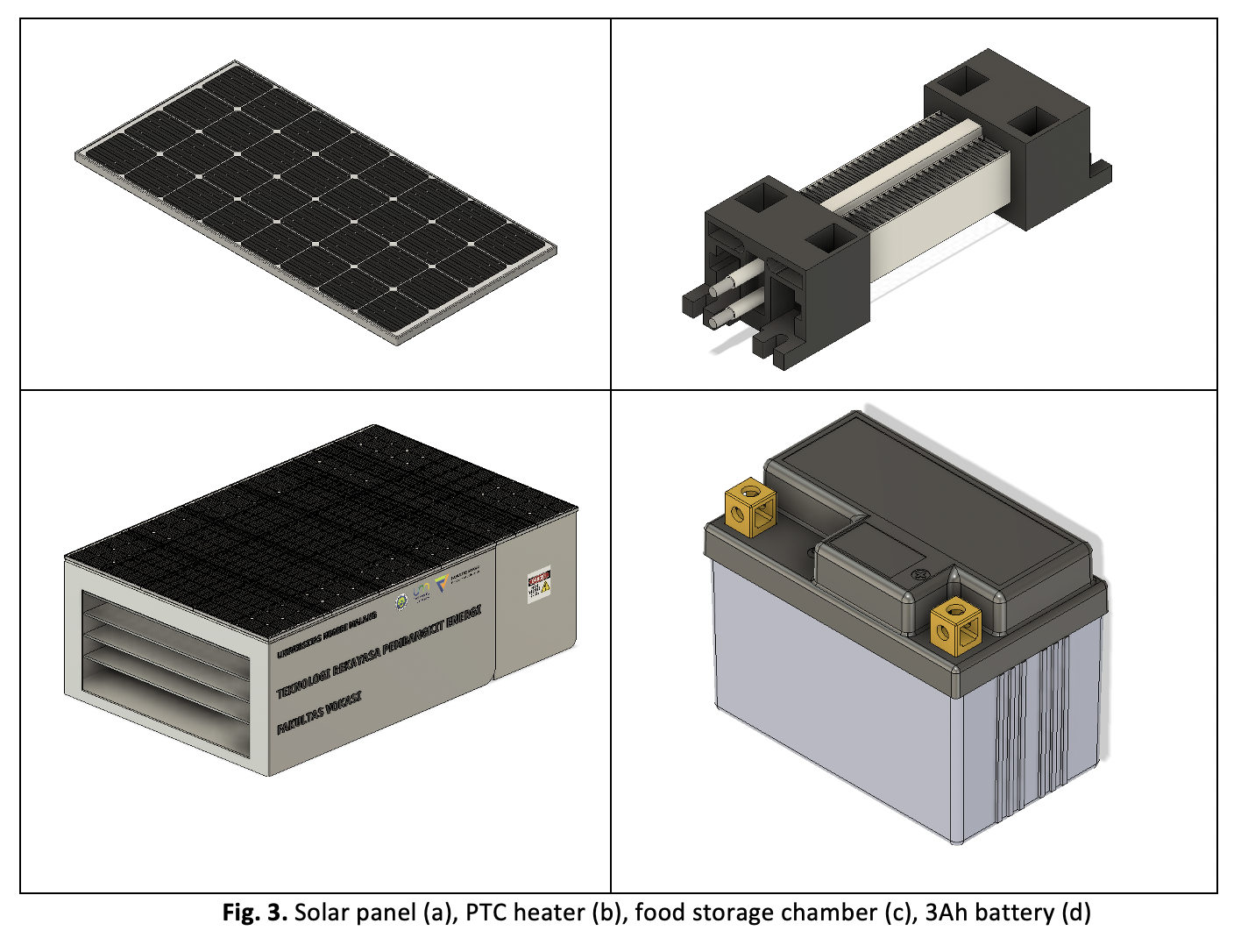
The need for efficient and low-carbon food warming systems in mobility applications continues to increase, particularly in maintaining food quality during the distribution process. However, conventional systems often experience uneven temperature distribution due to limitations in heat transfer mechanisms, leading to thermal stratification and reduced system efficiency. This study aims to numerically analyze the thermal distribution in a solar-powered food warmer prototype that utilizes a Positive Temperature Coefficient (PTC) heating element, by comparing the performance of natural convection and forced convection within an enclosed space. The analysis was conducted using a steady-state thermal method under steady-state conditions. The model considers heat transfer mechanisms including conduction, convection, and radiation. Two configurations were analyzed: without a fan (natural convection) and with a fan (forced convection), in order to evaluate temperature distribution, heat transfer characteristics, and system performance over time. The simulation results indicate that under natural convection conditions, the temperature distribution tends to be uneven, with the formation of thermal stratification where hot air accumulates in the upper part of the chamber. The average temperature gradually increases from 33.44°C to 50.48°C at 600 s, while the minimum temperature remains around 22°C, indicating the presence of a cold zone. In contrast, under forced convection conditions, the system shows a significant improvement in performance, with a more homogeneous temperature distribution and a faster heating process. The average temperature increases from 20.187°C to 61.552°C at 600 s, while the minimum temperature rises to 35.236°C, indicating a reduction in cold zones. Additionally, the temperature difference within the chamber is smaller, demonstrating improved thermal uniformity. Overall, the use of forced convection has been proven to enhance the effectiveness of heat transfer, accelerate the achievement of steady-state conditions, and produce a more uniform temperature distribution. Therefore, the integration of a fan becomes a crucial factor in optimizing the thermal performance of a solar-powered food warming system, making it more reliable and efficient for sustainable food distribution applications.