Enhancement of the Combined Class of Chief and Second Engineer Officer of 3000kw or More, Unlimited Trade Voyages (CCSU) Concept Via the Integrated Model of Training Effectiveness and Evaluation
Keywords:
Training evaluation, maritime education, competency development, chief engineer, STCW convention, integrated modelAbstract
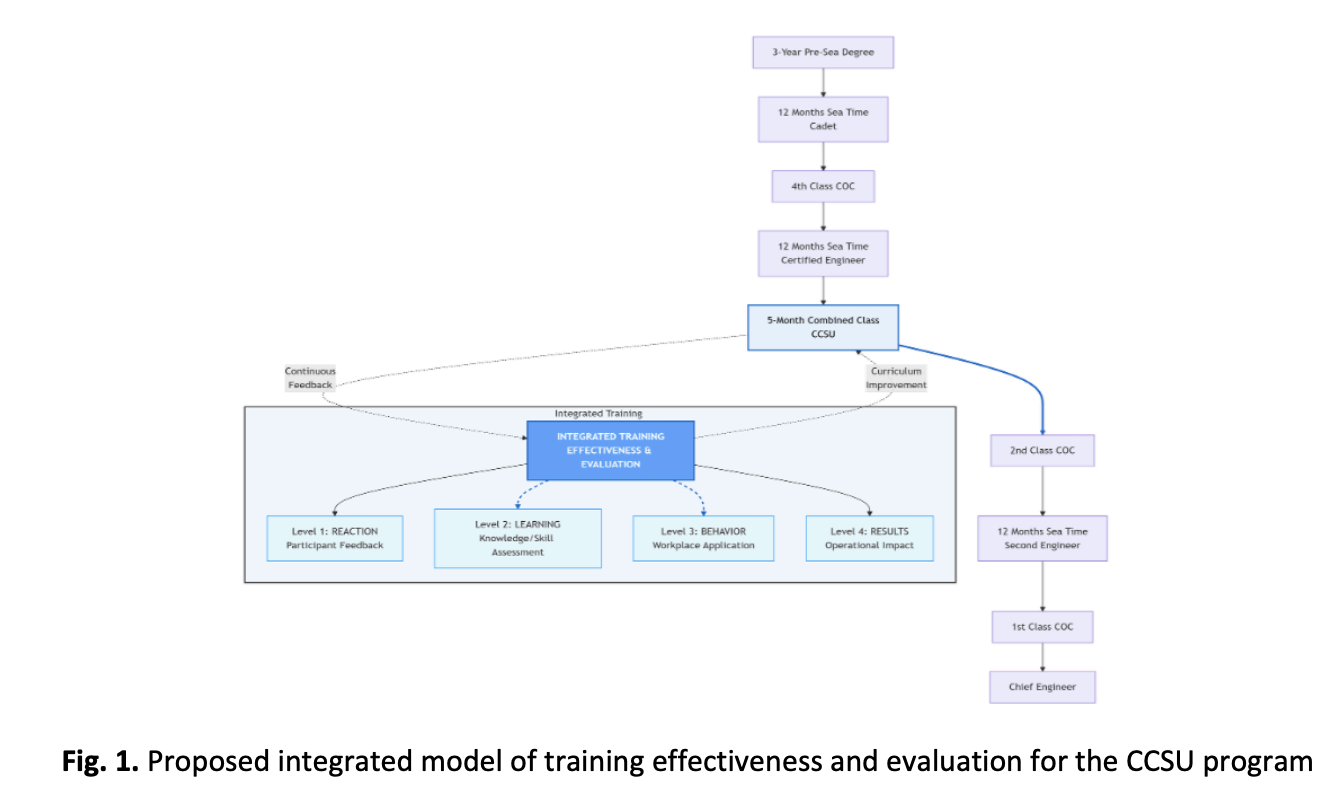
The Combined Class of Chief and Second Engineer Officer (CCSU) is critical for certifying senior marine engineers, yet existing training frameworks often lack a robust mechanism for evaluating effectiveness and ensuring outcomes align with the evolving demands of maritime operations. This study aims to address this gap by developing an integrated model to enhance the CCSU program systematically. Employing a qualitative methodology based on a systematic analysis of literature from the past three decades on training models and maritime education, this research synthesizes a novel conceptual framework. The primary result is a proposed Integrated Training Effectiveness and Evaluation Model for the CCSU, which embeds continuous evaluation mechanisms—including reaction, learning, behavior, and results assessments—directly into the traditional career progression pathway to create a dynamic feedback loop for curriculum improvement. The study concludes that this integrated model addresses a significant gap by providing a systematic approach to validate training quality, adapt to changes, and enhance competency outcomes, thereby contributing to higher levels of safety and efficiency in global shipping, with future empirical validation identified as a necessary next step.