Recentring Moral Leadership on the Heart Rather than Religiosity in Malaysian Higher Education
Keywords:
Amanah, governance, heart, higher education, integrity, moral leadership, religiosityAbstract
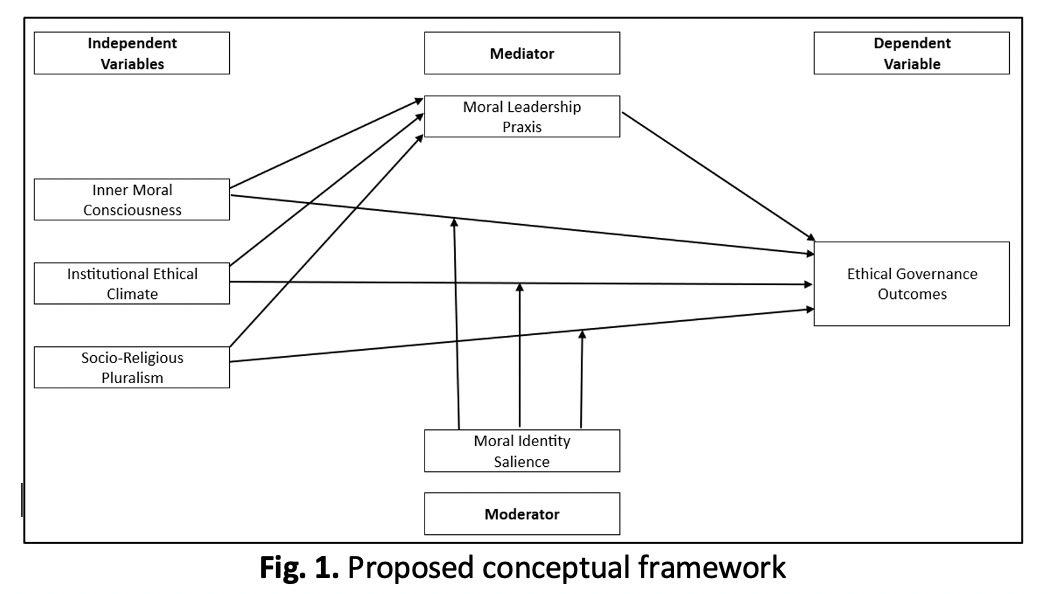
The increasing significance of Moral Leadership in higher education due to rampant issues related to integrity, governance and social responsibility has created a unique opportunity to research and further develop this area of leadership scholarship. In Malaysia, there is a strong cultural norm and religious consciousness that causes religious affiliation and practice to be an inherent aspect of most leadership discussion. Therefore, it has been accepted that having a religious affiliation or practicing a religion translates into having a better understanding of “moral” leadership. Nevertheless, this paper challenges that presumption by suggesting that while religion may give an individual moral vs ethical awareness of leadership, it does not have to be a determining factor in defining "moral" leadership. In addition, this paper argues that morality will inherently come from within the “heart” as opposed to coming from outside (e.g., religion). Using the concepts of “Amanah” (trust), integrity and human conscience or principles, this paper uses a robust analysis of both religiosity and the Theory of Moral Leadership in Malaysia in regards to their commitment towards the Sustainable Development Goals (SDGs) particularly SDG 4 (Quality Education), not limited to SDG 16 (Peace, Justice and Strong Institutions) and SDG 17 (Partnerships for the Goals) to create an integrative conceptual framework. This integrative conceptual framework postures moral leadership as emerging from the dynamic interaction between inner moral consciousness, institutional ethical climate, and socio-religious pluralism, rather than from religiosity alone. By reframing “moral” leadership as a shared human responsibility rather than a leader-centric or religion-centric attribute, the paper offers a more inclusive and ethically robust perspective. The paper contributes conceptually by decentring religiosity as the sole or primary moral determinant and foregrounding integrity, “Amanah”, and moral courage as universal ethical imperatives. Practically, it calls for higher education institutions to cultivate moral awareness across all members of the academic community, specifically the universities’ leaders, thereby strengthening ethical governance and advancing Malaysia’s related sustainable development agenda.