Investigating Factor Influencing Employee Turnover Intention in Malaysia’s Private Manufacturing Sector
Keywords:
Compensation and benefits, job stress, workload, employee turnover intention, manufacturing industryAbstract
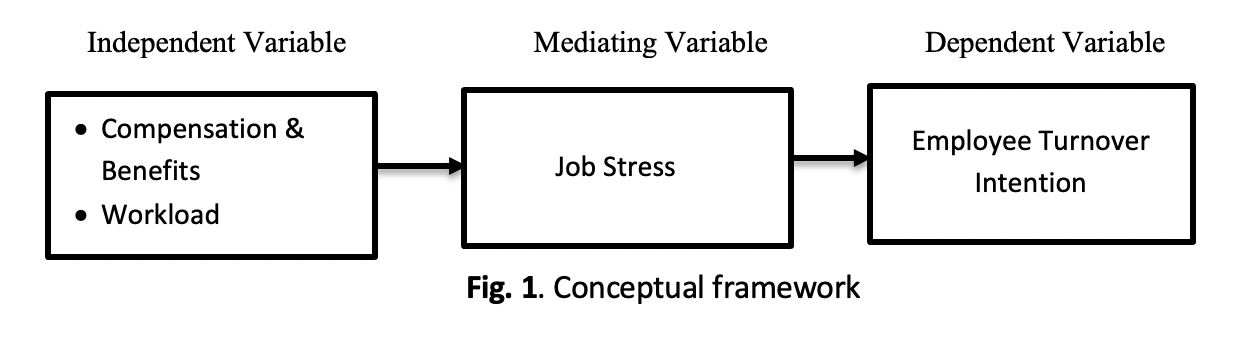
Turnover intention represents an employee's likelihood of leaving their current organization, often influenced by factors such as job satisfaction, career opportunities, and compensation. This study investigates the key factors driving employee turnover in Malaysia's private manufacturing sector, where high turnover rates significantly impact productivity, operational efficiency, and overall organizational performance. The primary objective of this study is to analyze the multifaceted relationship between compensation, workload, and employee retention within the manufacturing sector. Specifically, the research investigates the impact of financial benefits and workload adjustments on job stress level while evaluating how perceptions of fairness influence turnover intention. Ultimately, the study aims to identify optimal workload management practices that mitigate stress and foster long-term organizational stability. To gather empirical data, use a quantitative method which is a questionnaire survey for collecting sample size which is targeted to collect a sample size of 384 respondents. The reliability and validity of the survey were ensured through comprehensive validation using SPSS software version 30. Key findings from this study aim to provide significant implication for management within Malaysia’s manufacturing industry to develop equitable compensation strategies and effective workload management systems, aimed at enhancing employee well-being and reducing turnover rates.