Career Development, Workplace Culture, Work–Family Conflict, and Intention to Leave: A Conceptual Framework for Public Hospitals in Guizhou, China
Keywords:
Career development, intention to leave, public hospitals, Psychological Contract Theory, workplace culture, work–family conflictAbstract
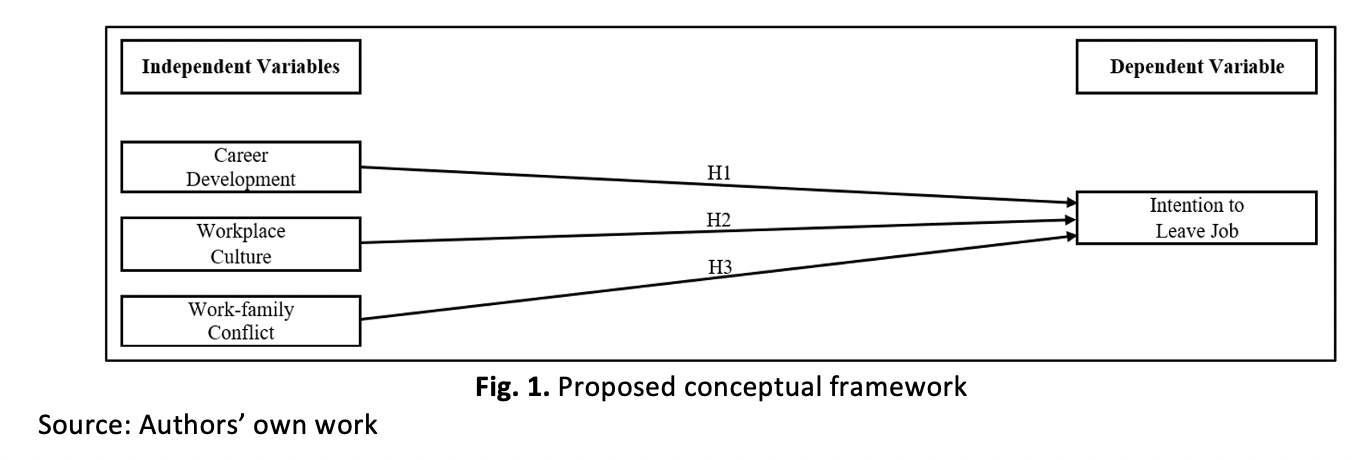
In recent years, retaining a healthcare workforce has emerged as a challenge for public hospitals (particularly in rural areas) due to the disparity of economics and because of structural constraints to health services. For example, public hospitals in Guizhou, China, face a shortage of doctors and nurses and inadequate institutional resources while experiencing a high workload which causes an increasing intent to leave the profession by many healthcare workers. While current research has identified that career development, workplace culture, and work–family conflict shape the intention to leave the profession, most of the existing literature remains fragmented, empirically biased and not adequately reflective of the unique regional and institutional contexts of healthcare professionals. Therefore, this conceptual paper examines the limitations of the current research and proposes a framework that will provide insight into how career development, workplace culture and work–family conflict is interrelated and collectively impact the intention of Guizhou's healthcare professionals to leave a public hospital. By aligning this new framework with existing theoretical foundation namely, the Psychological Contract Theory that is related to career development, organisational support and work–family interface, the researchers illustrate that without opportunities to develop professionally, support from their employer and relief from work–family pressures, healthcare professionals will have a decreased level of commitment and increased likelihood of leaving their profession. This conceptual paper situates these factors within Guizhou’s socio-economic context, thereby, contributing to theoretical understanding of turnover-related attitudes in resource-constrained healthcare. It also highlights the implications of healthcare workforce stability expanding beyond the issue of healthcare reform and contributing directly to China's regional economic development, through the achievement of Sustainable Development Goals related to health and decent work and reduced inequalities. Therefore, this framework provides a strong basis upon which to build future research and develop comprehensive and sustainable retention plans for public healthcare organisations.