Performance Evaluation of Recycled EPS for Sustainable Lightweight Paving Blocks
Keywords:
Expanded Polystyrene (EPS), recycled materials, lightweight paver blocks, sustainable construction, compressive strengthAbstract
The accumulation of non-biodegradable expanded polystyrene (EPS) waste is a persistent environmental concern. This study examines the feasibility of using recycled EPS as a partial replacement for fine aggregate in the production of sustainable and lightweight paving blocks, thereby conserving natural resources and promoting green construction. Three mix designs were tested: a standard control mix with a cement-sand ratio of 1:6, and two EPS-incorporated mixes, Mix A (1:3:3) and Mix B (1:4:2) by volume. Six samples were tested using ASTM standards C936, C140, and C642 to assess dry density, water absorption, and compressive strength after 7 and 14 days of curing. The results showed a considerable drop in block weight, with a maximum reduction of 20% compared to the control. Water absorption was significantly reduced in EPS mixtures, from 4.47% in the control to only 0.8% in Mix A. Compressive strengths ranged from 4.15 MPa to 6.33 MPa, with Mix B reaching the maximum value of 6.33 MPa after 7 days. The 1:4:2 mix composition worked best, properly balancing lower density, increased water resistance, and acceptable mechanical strength. This study verifies recycled EPS as a technically suitable and environmentally beneficial material for producing non-structural lightweight paving blocks, providing a feasible pathway for waste valorisation and the advancement of circular economy concepts in the construction industry.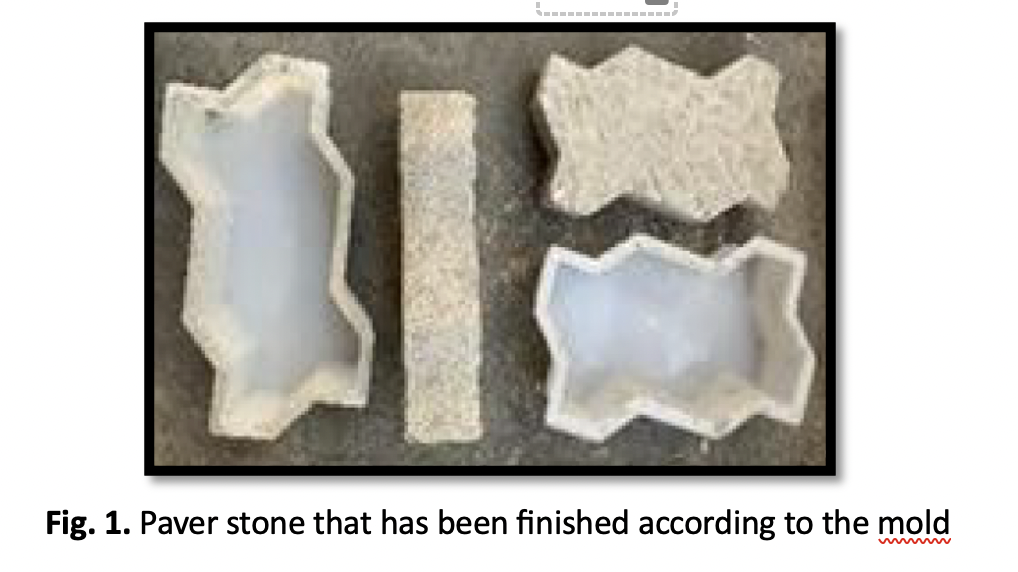
Downloads
Published
2026-02-23
How to Cite
Hashim, M. S. H., Md Udin, M. A., & Nekmat, N. N. (2026). Performance Evaluation of Recycled EPS for Sustainable Lightweight Paving Blocks. Semarak International Journal of Civil and Structural Engineering, 8(1), 1–12. Retrieved from http://semarakilmu.my/index.php/sijcse/article/view/995
Issue
Section
Articles