When Love Meets the Screen: Demographic Predictors of Phubbing among Married People
Keywords:
Phubbing, relationship disruption, social interference, phone prioritization, phone dependency, compulsive useAbstract
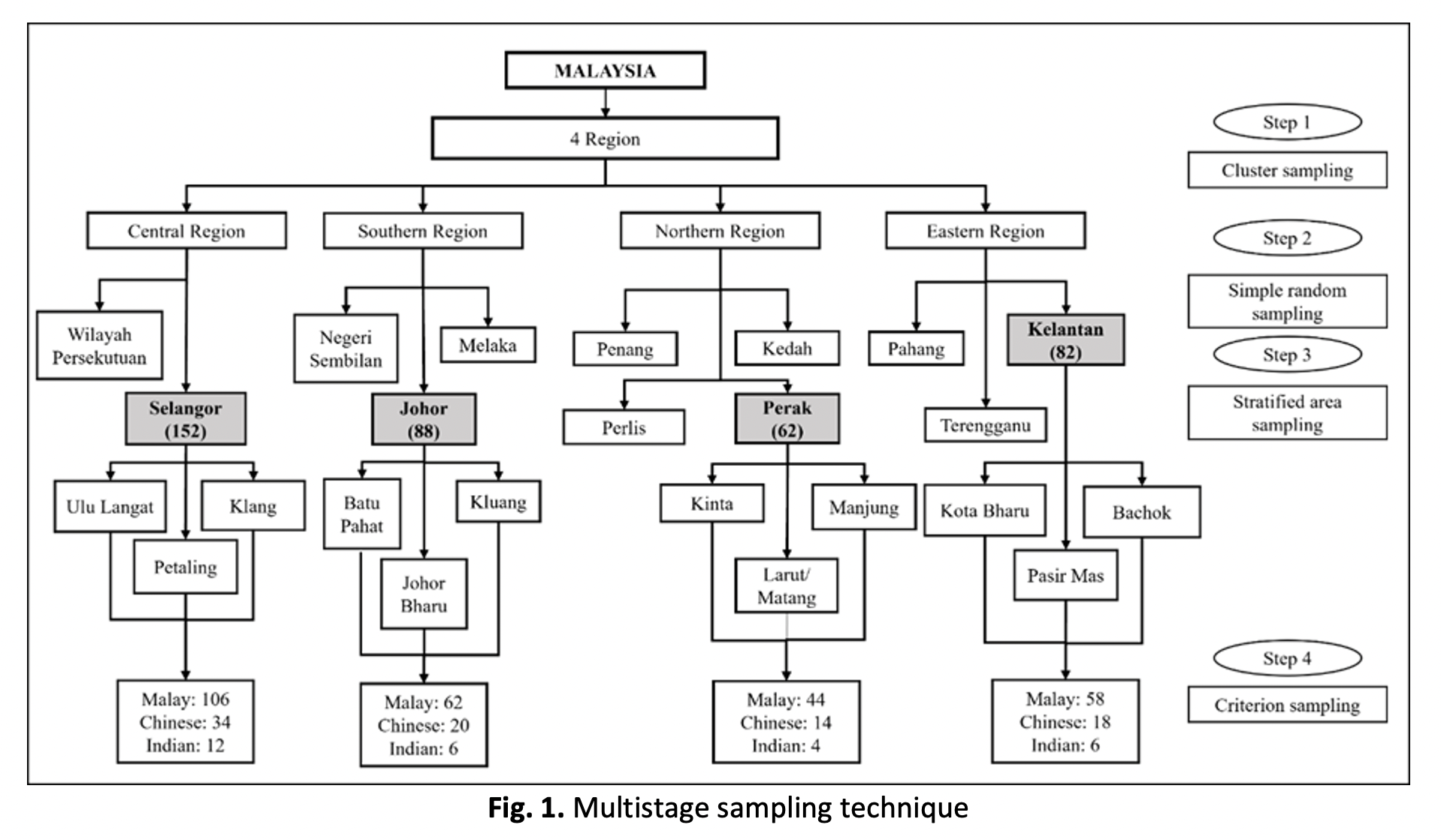
This study examines the frequency, patterns, and demographic associations of phubbing among married individuals in Peninsular Malaysia. A cross-sectional survey (N = 407) employing multistage sampling across four regions utilised a bilingual (Malay/English) questionnaire evaluated on a 5-point Likert scale. Exploratory factor analysis confirmed a multidimensional construct of partner-directed phone usage, yielding five trustworthy dimensions: Phone Prioritisation, Phone Dependency, Relationship Disruption, Social Interference, and Compulsive Phone Usage. The sampling adequacy was exceptional (KMO = 0.926) with a substantial Bartlett’s test, confirming suitability for factor analysis. Descriptively, overtly dismissive behaviours were typically minimal; yet, numerous respondents reported maintaining phones in sight or within reach, indicating a subtle yet continuous attentional draw towards electronics. The inferential tests revealed selective, factor-specific demographic influences. One-way ANOVA revealed that education substantially influenced Relationship Disruption (F3) (F = 3.307, p = .006) and Social Interference (F4) (F = 2.333, p = .042), although the effects on Phone Prioritisation, Phone Dependency, and Compulsive Use were not significant. Income groups exhibited significant differences on F3 (F = 3.818, p = .002) and F4 (F = 3.021, p = .011), with higher-income respondents attaining elevated scores; no income disparities were observed in other categories. Independent-samples t-tests indicated gender disparities, with males exhibiting higher levels of Phone Prioritisation (p < .001) and Social Interference (p < .05), while age and ethnicity showed no correlation with any factor. Research indicates that socioeconomic status is more significantly associated with the relational and social-contextual aspects of phubbing than with overall dependency or compulsion. Practical consequences encompass couple-oriented "phone-free" rituals and the establishment of boundaries around alerts and job obligations. Future study ought to utilise longitudinal or experimental methodologies to examine mechanisms and assess targeted, context-specific solutions.