Effectiveness of the Shout Out Method in Enhancing Interest and Interaction during Teaching and Learning Sessions Year 2 Students
Keywords:
Shout Out method, student interaction, active learning, constructivist pedagogyAbstract
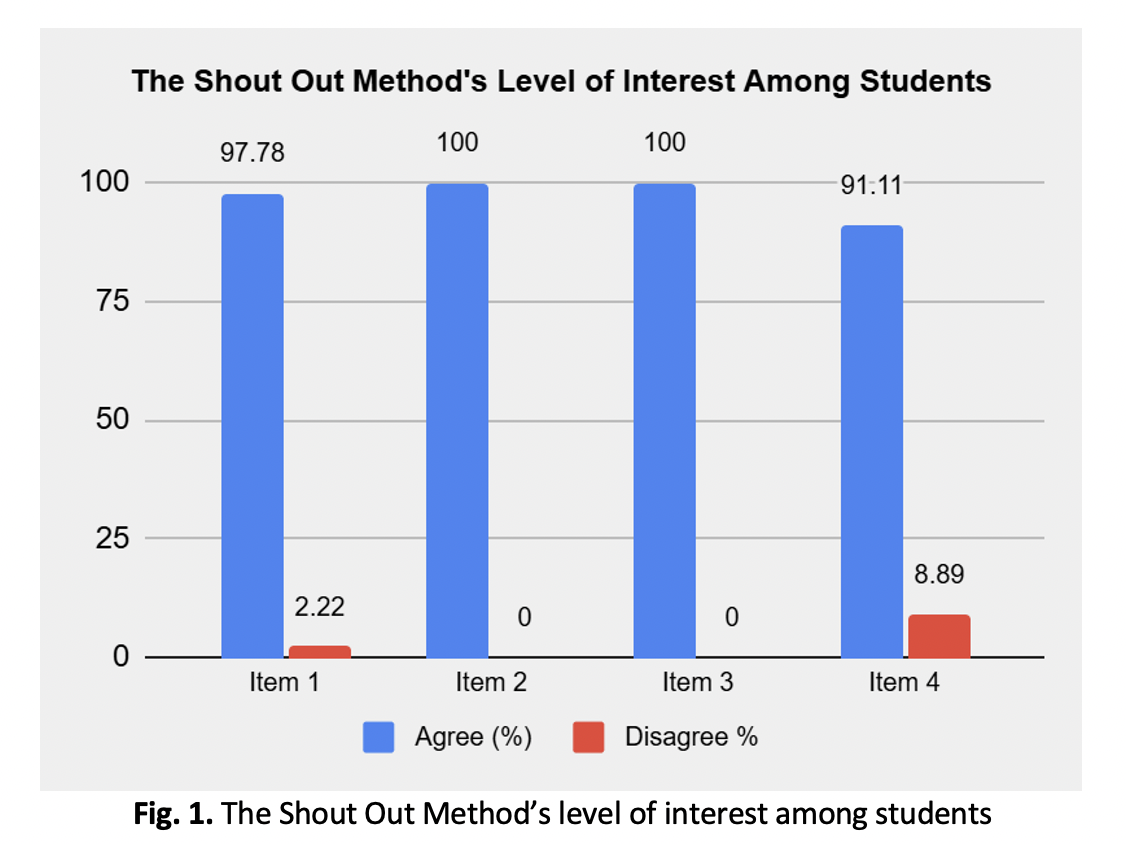
Primary schools in Malaysia often rely on teacher-centred instruction, resulting in passive learning, low interaction, and declining student interest. These issues contradict the aims of PAK21 and the PPPM 2013–2025, which emphasise active, student-centred engagement. A qualitative research design was employed involving 45 students in a primary school in Kerteh, Terengganu. Data were collected through classroom observations, student questionnaires, and teacher interviews, then validated using triangulation. Descriptive and thematic analyses were applied to identify behavioural patterns and teacher insights. Findings show that the Shout Out method substantially increased student interest (97.78%–100%) and interaction (80%–86.67%). Students were highly motivated, eager to respond, and consistently engaged during lessons. Comprehension also improved, with 97.78%–100% agreeing that expressing answers aloud and interacting actively helped them understand content more effectively. Teacher observations supported these outcomes, noting strong participation and two-way communication. Although a small group of shy students preferred less spontaneous methods, the overall response was overwhelmingly positive. In conclusion, the Shout Out method is an effective, energetic, and developmentally appropriate strategy that enhances Year 2 learning and aligns strongly with 21st-century pedagogy. Its low cost, low preparation approach also makes it particularly suitable for resource limited primary school settings.