Revealing the Bacterial Community Structure of Aerobic Granular Sludge for Agro-based Wastewater Treatment
Keywords:
Aerobic granular sludge, bacterial community, next generation sequencingAbstract
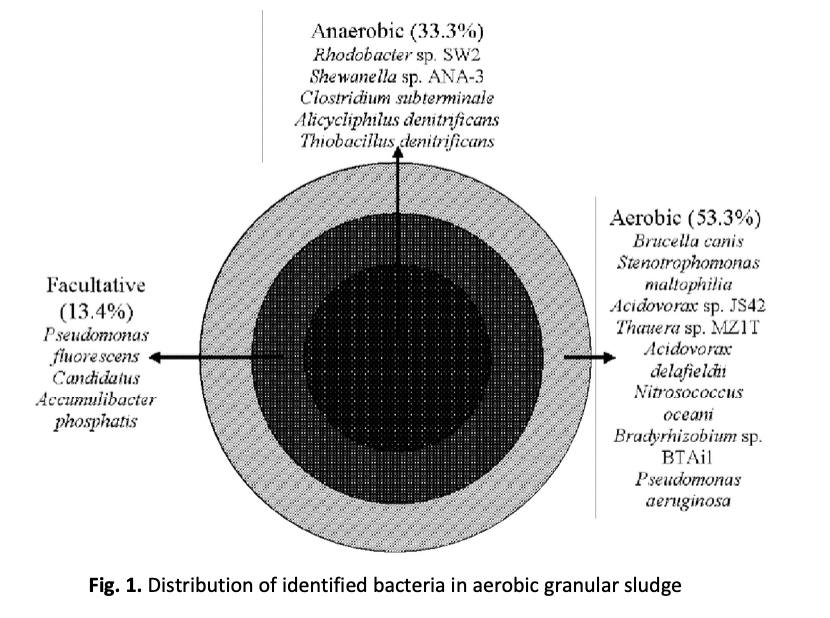
This study examined the development and composition of bacterial communities in an aerobic granular sludge bioreactor using Illumina high-throughput sequencing. Mature granules with a compact structure were obtained after 90 days of bioreactor operation, with the organic loading rate varying between 2.5 and 3.3 kg COD m-3 d-1. Cocci-shaped microbes were observed to cover the outer surface of granules. Reliable COD and simultaneous nitrogen and phosphorus removal efficiencies were achieved during the steady-state period. Metagenomic sequencing analysis revealed that Pseudomonas (34.05%) was the most dominant genus, followed by Bacteroides (10.27%) and Clostridium (2.68%). Several microorganisms were identified as functional bacterial groups responsible for pollutant removal, contributing to organic and nutrients biodegradation. Exopolysaccharide-producing bacteria, accounting for 70.71% of the total abundance, appeared to be responsible for the formation of granules, and the stability of the microbial granulation reactor.