Species Composition and Diversity of Birds for Potential Environmental and Biological Sensitive Areas in Langkawi, Kedah
Keywords:
Avifauna, coastal birds, species richness, biodiversity, EBSAsAbstract
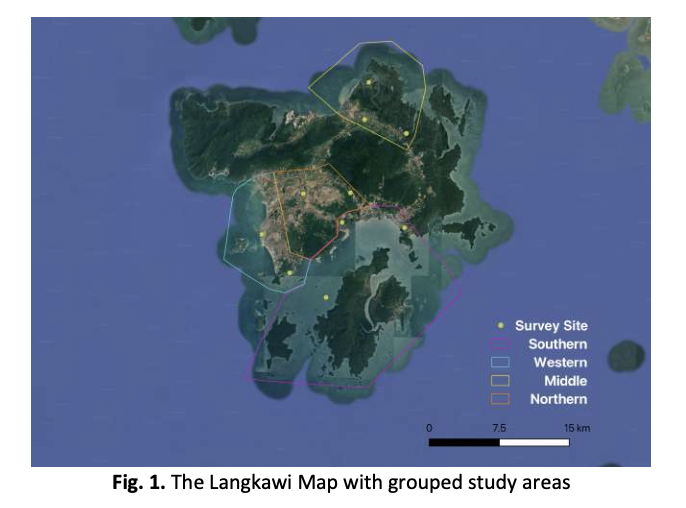
Langkawi which was recognised in 2007 as Southeast Asia’s first UNESCO Global Geopark for its exceptional Palaeozoic geological record, is also a major tourist destination in Malaysia. Rapid coastal development for tourism, however, is altering critical habitats for coastal birds. To address the absence of baseline data, this study conducted a comprehensive, three-day survey of coastal bird populations across Langkawi. Bird observations and photographic documentation were conducted during peak activity periods (morning and evening), recording 1,055 individuals from 66 species in 30 families. Ardeidae was the most species-rich family (eight species), while the Brahminy Kite (Haliastur indus) was the most abundant (149 sightings). The survey documented two threatened species on the IUCN Red List namely the Great Hornbill (Buceros bicornis) and the near threatened Brown-winged Kingfisher (Pelargopsis amauroptera). Overall, coastal bird biodiversity was high (Shannon Index, H'=3.45; Simpson Index, 1-D=0.95). The western coastal area near Cenang exhibited the highest diversity (H'=3.27, 44 species), followed by the northern region encompassing Tanjung Rhu and Kilim Karst Geoforest Park (H'=3.24, 34 species). These results underscore Langkawi’s important role as a habitat for coastal and threatened birds and provide a crucial baseline for identifying Environmental and Biological Sensitive Areas (EBSAs) and may contribute toward sustainable coastal management strategies.