Cave-Roosting Bat Ecology in Malaysian Agroecosystems: The Gunung Keriang Study
Keywords:
Bats diversity, reproductive pattern, cave conservation, agricultural areaAbstract
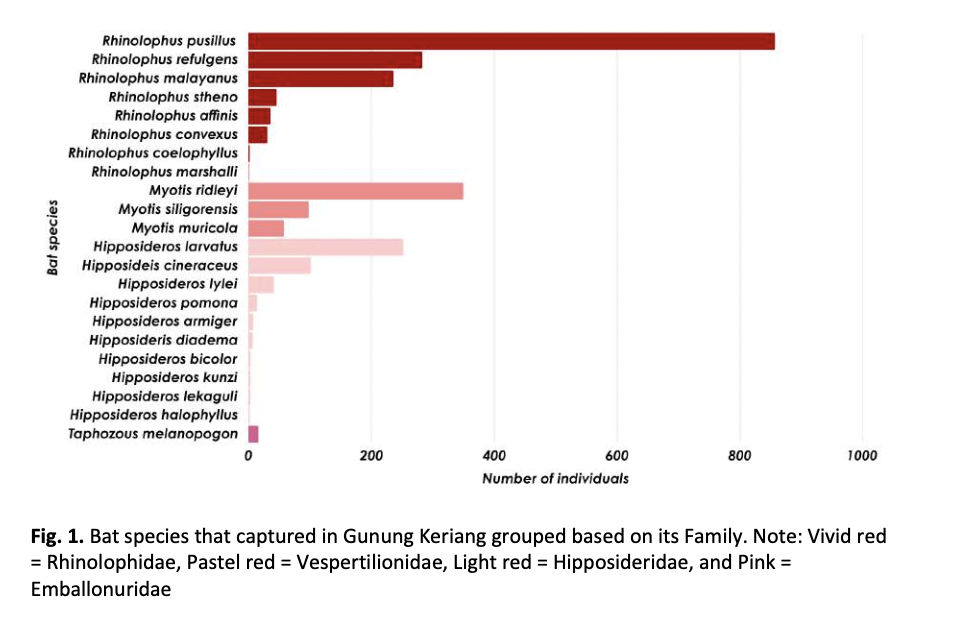
Malaysia is home to remarkable biodiversity, with bats comprising nearly one-fifth of all mammal species globally. This study investigated the diversity and breeding patterns of bats at Gunung Keriang, which is surrounded by rice field areas. A total of 1,250 individuals representing 22 species were recorded between April 2021 and April 2022, primarily from the families Rhinolophidae, Hipposideridae, and Vespertilionidae. The most abundant species was Rhinolophus pusillus (n=857). Several species face extinction risks based on the IUCN Red List, including Myotis ridleyi (Near Threatened), H. lekaguli (Near Threatened), and H. halophyllus (Vulnerable). Regardless of family, the three studied bat species in Gunung Keriang exhibited a unimodal breeding pattern throughout the year. This indicates that cave-roosting bats reproduce only once annually, with active breeding stages (pregnancy and lactation) concentrated in April and May. Based on species-specific observations, pregnancy was recorded two months later in Myotis ridleyi (April, early dry season) than in Rhinolophus pusillus and Hipposideros larvatus (February, end of wet season). The percentage of non-reproductive Hipposideros larvatus began to increase in August, approximately three months after the first juvenile/pup was recorded. Lactating females of Rhinolophus pusillus were recorded in April, with peak lactation occurring in May. These findings emphasise Gunung Keriang's importance as a vital natural refuge for Malaysia's bat conservation. The breeding pattern of cave-roosting bats in Gunung Keriang showed synchronised maternity with the availability of insects (food resources) in agricultural areas.