Isolation and Characterisation of High Value Microbes from Rhizosphere Soil of Dipterocapaceae Plants
Keywords:
Heavy metals-Resistant, Plant Growth Promoting Bacteria, Cellulose-Degrading Bacteria, ActinomycetesAbstract
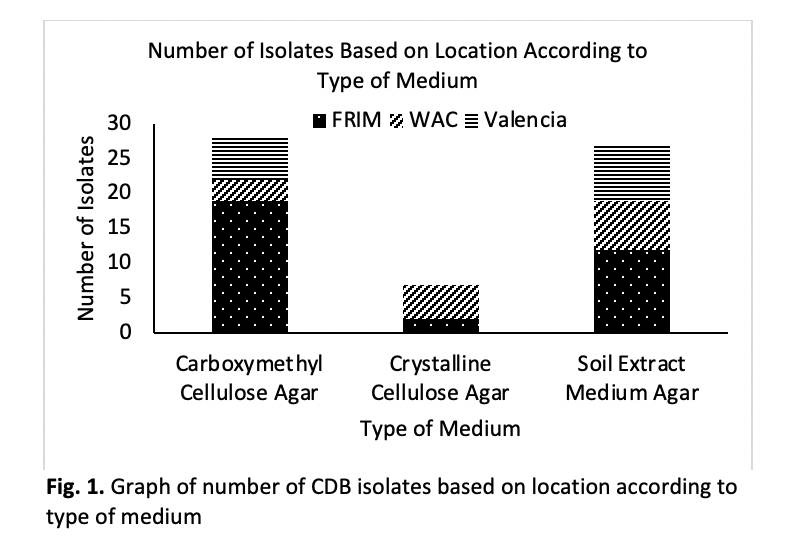
The rhizosphere soil of Dipterocapacea supports diverse microbial communities with functional potentials relevant to forest conservation, agriculture and environmental sustainability. This study investigated the microbial functional capabilities of rhizosphere soil from four selected dipterocarp species (Dipterocarpus oblongifolius, Neobalanocarpus heimii, Shorea sumatrana and Dryobalanops aromatica) from FRIM Dipterocarp Arboretum, Gamuda Valencia (Township) and Wetland Arboretum Centre (WAC) (Nursery). Culture-dependent approaches successfully isolated diverse functional isolates. 62 cellulose-degrading bacteria were isolated using three selective media, with carboxymethyl cellulose (CMC) agar proving most effective (28 isolates). Four Actinomycetes isolates displaying characteristics of filamentous morphology and pigments diffusion were recovered, with Actinomycetes Isolation Agar (AIA) yielding optimal results. Plant growth-promoting bacteria (PGPB) demonstrated significant capabilities in indole-3-acetic acid synthesis, phosphate solubilization and zinc solubilization, with combined PGPB-fertiliser treatments producing better growth outcomes for Brassica juncea seedlings. Heavy metal resistance screening identified 20 bacterial isolates capable of tolerating elevated concentrations of Ni (4000 mg/L), Pb (1500 mg/L), Cr (1500 mg/L), Cd (550 mg/L) and As (600 mg/L). These findings demonstrate the rich functional diversity of dipterocarp rhizosphere soil microbiomes and their potential for sustainable agriculture, bioremediation and pharmaceutical applications.