Unravelling Microbial Communities in the Rhizosphere Soil of Selected Dipterocarpaceae species through Amplicon Sequencing
Keywords:
Microbiome, Diversity, 16S, 18S, Dipterocarp, Nanopore SequencingAbstract
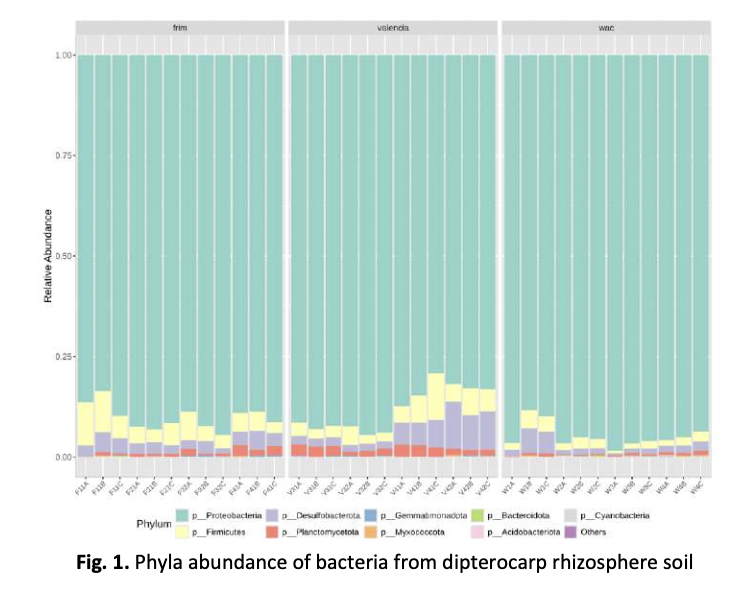
The Dipterocarpaceae family, comprising nearly 700 species, is a dominant component of Southeast Asian tropical rainforest. In Malaysia, dipterocarps are widely distributed and serve as one of the essential tree families in the forest ecosystems. Their rhizosphere represents a unique microhabitat where complex interactions between roots, soils, and microbial communities occur. However, there are limited datasets on microbial diversity of Malaysian dipterocarp rhizosphere soil. This study aimed to unravel the microbial diversity of selected dipterocarp species (Dipterocarpus oblongifolius, Neobalanocarpus heimii, Shorea sumatrana, and Dryobalanops aromatica) across three environmentally different sites: the FRIM Dipterocarp Arboretum, Valencia (township), and Wetland Arboretum Centre (WAC) (nursery), using amplicon sequencing. Bacterial communities were dominated by Proteobacteria across all sites, with WAC showing significantly higher bacterial diversity (Shannon index). Eukaryotic communities were primarily fungal, dominated by Basidiomycota and Ascomycota, with WAC showing significantly higher eukaryotic diversity (Shannon index). Beta diversity analysis revealed distinct clustering patterns, with WAC harboring the most unique community structures for both bacteria and eukaryotes. This study reveals that site-specific conditions drive the microbial diversity and composition of dipterocarp rhizosphere soil.