Microbial Contamination of Airborne Particulate Matter (PM2.5 and PM10) In Kuala Lumpur’s Ambient Air
Keywords:
Airborne bacteria, Particulate Matter (PM2.5 and PM10), Monsoon Seasons (SW and IM II)Abstract
Regional haze episodes frequently affect developing countries, causing severe air pollution and potential health risks. However, conventional air quality monitoring often overlooks the biological components of airborne particulate matter (PM). This study investigates microbial contamination associated with fine (PM₂.₅) and coarse (PM₁₀) particulates in Kuala Lumpur during the Southwest Monsoon and Inter-monsoon II periods. Samples were collected using High Volume (HVS) and Low Volume Samplers (LVS) equipped with glass microfibre filters. Culture-based enumeration on Tryptone Soy Agar (TSA) and shotgun metagenomic sequencing were performed to quantify bacterial loads and characterize community composition. The highest bacterial counts in PM10 were recorded during the Southwest Monsoon and Inter-monsoon II, at 5.42 ± 0.49 and 5.40 ± 0.73 log CFU/g, respectively. No significant differences were observed between monsoon periods (p > 0.05), and bacterial abundance was not correlated with PM concentration. Metagenomic analysis revealed greater bacterial diversity during the Southwest Monsoon, dominated by Firmicutes and Pseudomonadota, including potentially pathogenic genera such as Staphylococcus, Bacillus and Burkholderia. In contrast, Bacillusand Clostridium predominated during Inter-monsoon II. These findings highlight seasonal variations in airborne bacterial communities and emphasize the need to incorporate microbial assessment into air quality monitoring frameworks.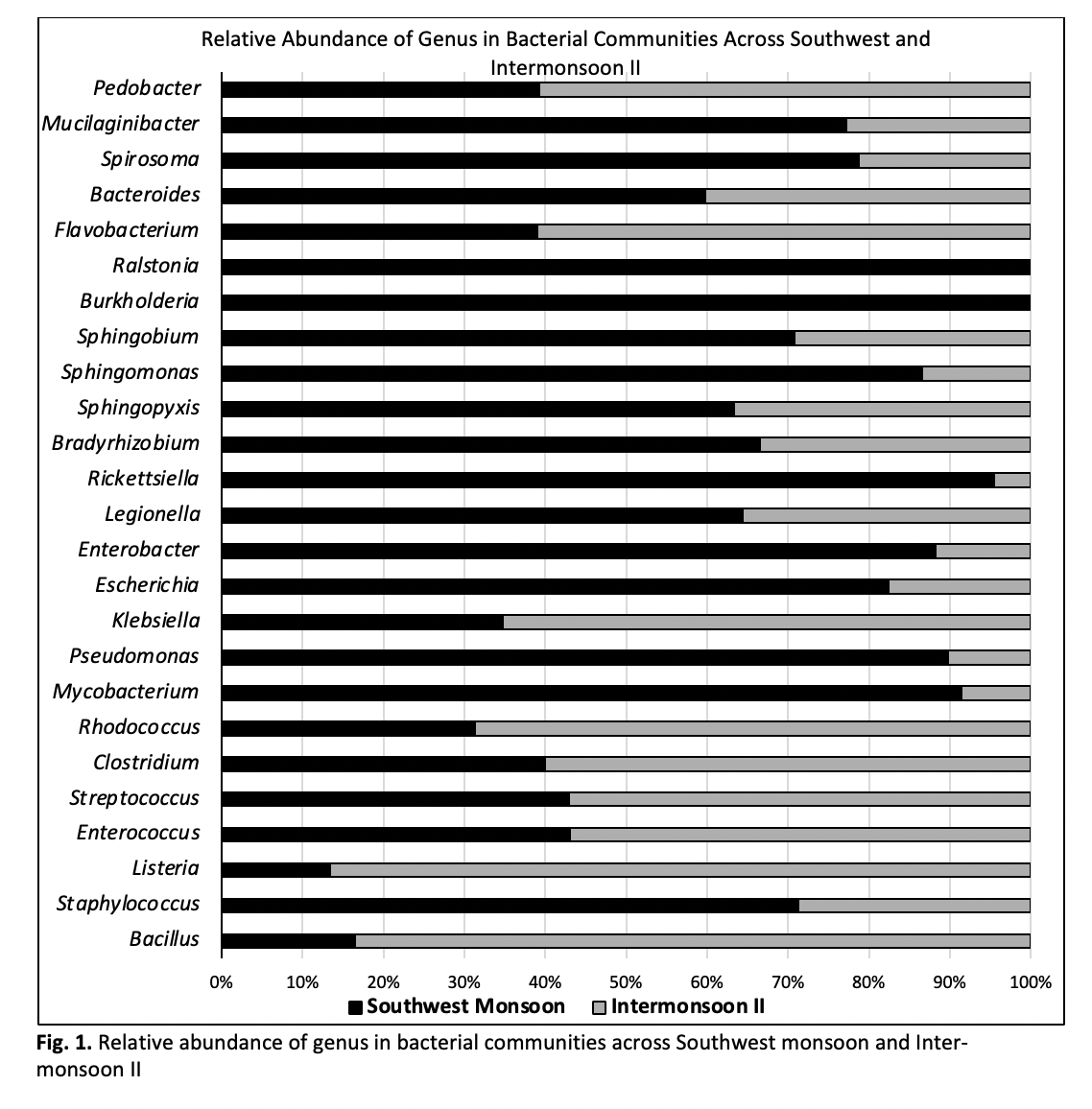
Downloads
Published
2026-05-15
How to Cite
Nurul Tasha Zulkifle, Nurmizani Hashim, Hui-min Neoh, Nur Faizah Abu Bakar, & Siti Shahara Zulfakar. (2026). Microbial Contamination of Airborne Particulate Matter (PM2.5 and PM10) In Kuala Lumpur’s Ambient Air . Semarak Proceedings of Natural and Environmental Sciences, 4(1), 13–19. Retrieved from https://semarakilmu.my/index.php/spnes/article/view/1091
Issue
Section
Articles