Enterobacterial Repetitive Intergenic Consensus Polymerase Chain Reaction Genotyping of Extended-Spectrum Beta-Lactamase - Producing Klebsiella pneumoniae Strains from A Malaysian Teaching Hospital
Keywords:
Klebsiella pneumoniae (KP), Extended-Spectrum Beta-Lactamase (ESBL), Enterobacterial repetitive intergenic consensus polymerase chain (ERIC-PCR)Abstract
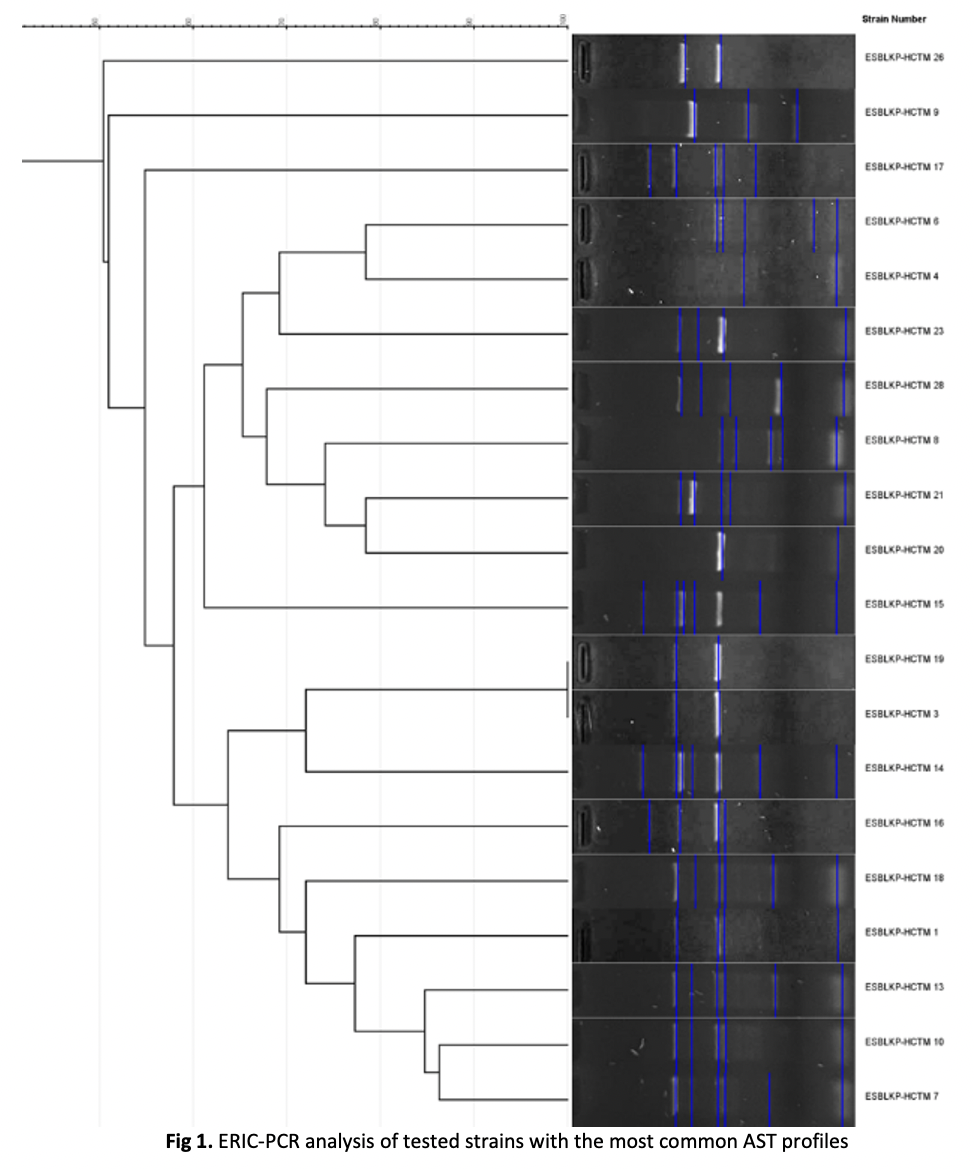
Klebsiella pneumoniae (KP) is a major cause of hospital-acquired infections (HAIs). The bacteria can acquire plasmids encoding Extended-Spectrum Beta-Lactamases (ESBL) that confer resistance to many antibiotics and lead to treatment failure. This study aimed to determine the prevalence of five ESBL genes (blaTEM + blaCTX-M-1 + blaCTX-M-9 + blaSHV + blaOXA-1) and the genetic relatedness of ESBLKP strains isolated from Hospital Canselor Tuanku Muhriz (HCTM), the teaching hospital of Universiti Kebangsaan Malaysia. From December 2023 to May 2024, 31 ESBLKP strains and their antibiotic susceptibility testing (AST) results were obtained from the Department of Diagnostic Laboratory Services. ESBL genotyping was performed using the Polymerase Chain Reaction (PCR), and Enterobacterial Repetitive Intergenic Consensus PCR (ERIC-PCR) was carried out on strains exhibiting the three most common AST profiles. Tested strains were resistant to 3rd -generation cephalosporins, with notable resistance to cefepime (90.3%), amoxicillin-clavulanate (83.9%), ampicillin-sulbactam (67.7%), and ciprofloxacin (51.6%). Worryingly, three strains were carbapenem-resistant. The most prevalent ESBL genes were blaSHV (100%) and blaCTX-M-1 (90.3%), while 54.8% of the strains carried the combination blaTEM + blaCTX-M-1 + blaSHV . ERIC-PCR revealed four main clusters with 70% similarity. Our findings demonstrate a high prevalence of blaSHV and blaCTX-M-1 also highlight the genetic diversity of ESBLKP strains isolated from HCTM patients. In addition to monitoring AST trends, continuous genetic surveillance of ESBLKP will be important.