
Effects of Cocoa Flavanol Supplementation on Maximum Oxygen Uptake in Trained and Non-Trained Male Participants During Intermittent Exercise

Authors

  • Fatin Nur Shahira Zamri University Technology MARA, Negeri Sembilan Branch, Seremban Campus, Negeri Sembilan, Malaysia
  • Nurul Diyana Sanuddin University Technology MARA, Pahang Branch, Jengka Campus, Negeri Sembilan, Malaysia
  • Adam Linoby University Technology MARA, Negeri Sembilan Branch, Seremban Campus, Negeri Sembilan, Malaysia
  • Norlaila Azura Kosni University Technology MARA, Pahang Branch, Jengka Campus, Negeri Sembilan, Malaysia
  • Nurul Nadiah Shahudin University Technology MARA, Shah Alam, Selangor, Malaysia

Keywords:

Cocoa flavanols, high-intensity intermittent exercise, polyphenol supplementation, antioxidant effects, exercise recovery, fitness status

Abstract

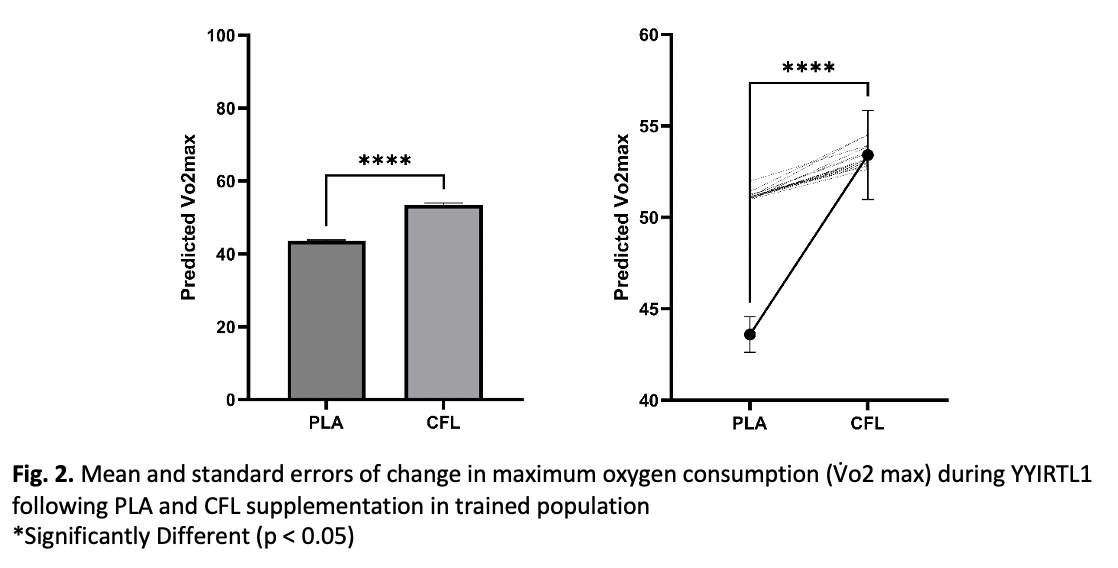
Cocoa flavanols improve vascular function and antioxidant capacity through bioactive compounds such as epicatechin, offering potential ergogenic benefits for aerobic performance. However, fitness status may modulate these effects during intermittent exercise, and the magnitude of this interaction remains unclear. This study examined whether cocoa flavanol supplementation enhances maximum oxygen consumption differently in trained versus non-trained male participants during high-intensity intermittent exercise. A double-blind, randomized, crossover trial enrolled 44 males divided equally into trained and non-trained groups. Participants completed two seven-day supplementation periods: cocoa flavanols (1.35 g daily containing 255 mg epicatechin and 60 mg caffeine) and placebo (3.5 g brown sugar). A 14-day washout separated conditions. The final dose was consumed 1.5 hours before testing. Maximum oxygen consumption was assessed using the Yo-Yo Intermittent Recovery Test Level 1, with performance converted to oxygen uptake values. Dietary intake and physical activity were standardized across trials. Cocoa flavanol supplementation produced significant increases in maximum oxygen consumption in both groups compared to placebo. Trained participants demonstrated a marked improvement (mean difference = 9.818 mL·kg⁻¹·min⁻¹, t (21) = 21.21, p < 0.0001, partial η² = 0.9554), with high consistency across individuals. Non-trained participants showed smaller but significant gains (mean difference = 4.756 mL·kg⁻¹·min⁻¹, t (21) = 3.378, p = 0.0028, partial η² = 0.3521), though with greater individual variability. The trained cohort exhibited more than 95% of variance explained by supplementation, whereas the non-trained group demonstrated approximately 35%. Cocoa flavanol supplementation enhances aerobic capacity during intermittent exercise in both trained and non-trained males, with fitness status modulating response magnitude. Trained individuals derive larger, more consistent benefits, likely reflecting superior vascular responsiveness and mitochondrial density. These findings support cocoa flavanols as a viable nutritional strategy for improving intermittent exercise performance, particularly in athletic populations. Individual variability in less-trained groups warrants consideration when prescribing supplementation protocols.

Author Biography

Nurul Diyana Sanuddin, University Technology MARA, Pahang Branch, Jengka Campus, Negeri Sembilan, Malaysia

diyanasanuddin@uitm.edu.my

Downloads

Published

2026-05-23

Issue

Section

Articles