Development of A Prototype for Livestock Monitoring using IoT Sensor
Keywords:
GPS sensor, looker, SpO2, livestock monitoring, ESP32 LoRaWANAbstract
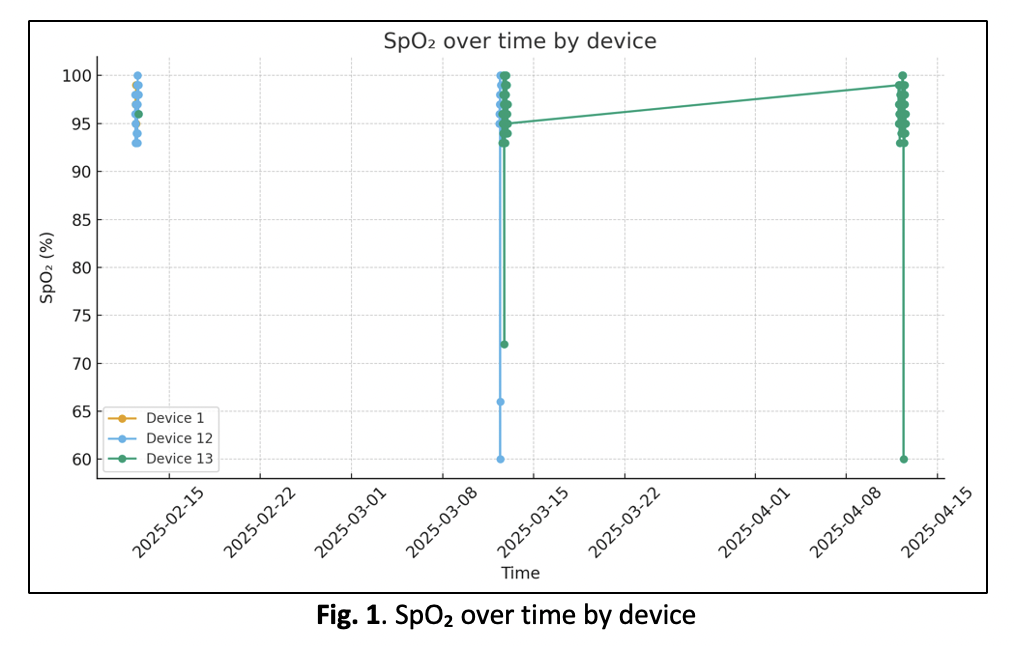
Effective livestock monitoring plays an increasingly important role in improving herd management, reducing avoidable losses, and supporting the transition toward precision-based agricultural practices. In Sarawak, the lack of continuous and dependable monitoring systems—especially in rural areas where digital infrastructure remains limited—has drawn attention to the need for more innovative approaches to livestock surveillance. In response to this challenge, the present study aims to introduce an IoT-driven tracking prototype designed to facilitate real-time observation of goat movement and physiological status in open-grazing environments. The prototype was field-tested at Borneo Happy Farm, an agro-tourism and livestock site that offers a realistic and practical environment for evaluating new monitoring technologies. The system brings together the Global Positioning System (GPS) NEO-6 u-blox 6 module for precise geolocation capture and the ESP32 LoRaWAN Heltec V3.2 microcontroller to enable long-range, low-power communication. A rechargeable battery supports extended operation, while Starlink satellite connectivity makes it possible to maintain stable data transmission even in locations where terrestrial networks are unreliable. The prototype gathers both positional information and peripheral oxygen saturation (SpO₂) readings and relays them through LoRaWAN to a cloud-based repository for further analysis. To assist users, a Looker-based dashboard provides real-time maps, movement histories, and spatial behaviour patterns, offering an intuitive tool for farm operators to interpret and act upon field data. Findings from the deployment at Borneo Happy Farm suggest that the monitored goats displayed normal grazing patterns, and their SpO₂ levels remained consistently stable across all activity zones, indicating no signs of physiological stress. Moreover, performance assessments show that the system delivered reliable data transmission, responsive sensor behaviour, and efficient power use. Taken together, these outcomes indicate that the proposed prototype is both feasible and effective for livestock monitoring in remote agricultural settings. Overall, the findings demonstrate the feasibility of integrating GPS-based movement tracking and SpO₂ monitoring within a low-power wearable platform, providing a preliminary foundation for future precision livestock monitoring systems in rural settings, subject to further validation across larger herds and diverse farm conditions.