Termites Diversity at Different Locations of Universiti Teknologi Mara (UiTM) Jengka Campus, Pahang, Malaysia
Keywords:
termites, diversity, species richness, pahangAbstract
Termites, often considered pests, play crucial roles in ecosystems by mediating ecological processes, enhancing soil quality, and aiding decomposition. Despite the ecological importance of termites in tropical ecosystems, studies on termite diversity in Malaysia remain geographically uneven. Most published surveys have focused on specific localities such as Pulau Pangkor in Perak, Berembun Forest Reserve in Negeri Sembilan, and several sites in Sabah, while information from many areas of Peninsular Malaysia remains scarce. In Pahang, available studies are largely restricted to termite communities associated with oil palm plantations in Endau Rompin, leaving many natural and managed habitats insufficiently documented. This study focused on assessing termite diversity and population at Universiti Teknologi MARA (UiTM) Jengka Campus, Pahang, characterized by dense vegetation amidst built-up areas. Nine locations were surveyed, including the Seri Gading Forest, around the Infra Sains Teknologi (IST) area, Fast Track area, around Kolej Tok Gajah, Rumah Tamu pond, Kolej Tok Gajah lake route, hockey field, WoodTech area, and UiTM front gate hill. Data collection involved transect walks, quadrat sampling, and active searches. A total of 19 termite species from two families and four subfamilies were identified. Microcerotermes crassus, a species of the family Termitidae, had the highest species abundance, with 216 individuals. Meanwhile, the Seri Gading Forest is home to a high species richness of termites, with nine species identified there. Most observed termite species belonged to the wood-feeding group, with nesting preferences of arboreal, epigeal, and wood-nesting across the sampling sites. The findings offer insights into pest management strategies, particularly by understanding termite diversity, feeding habits, and habitat preferences.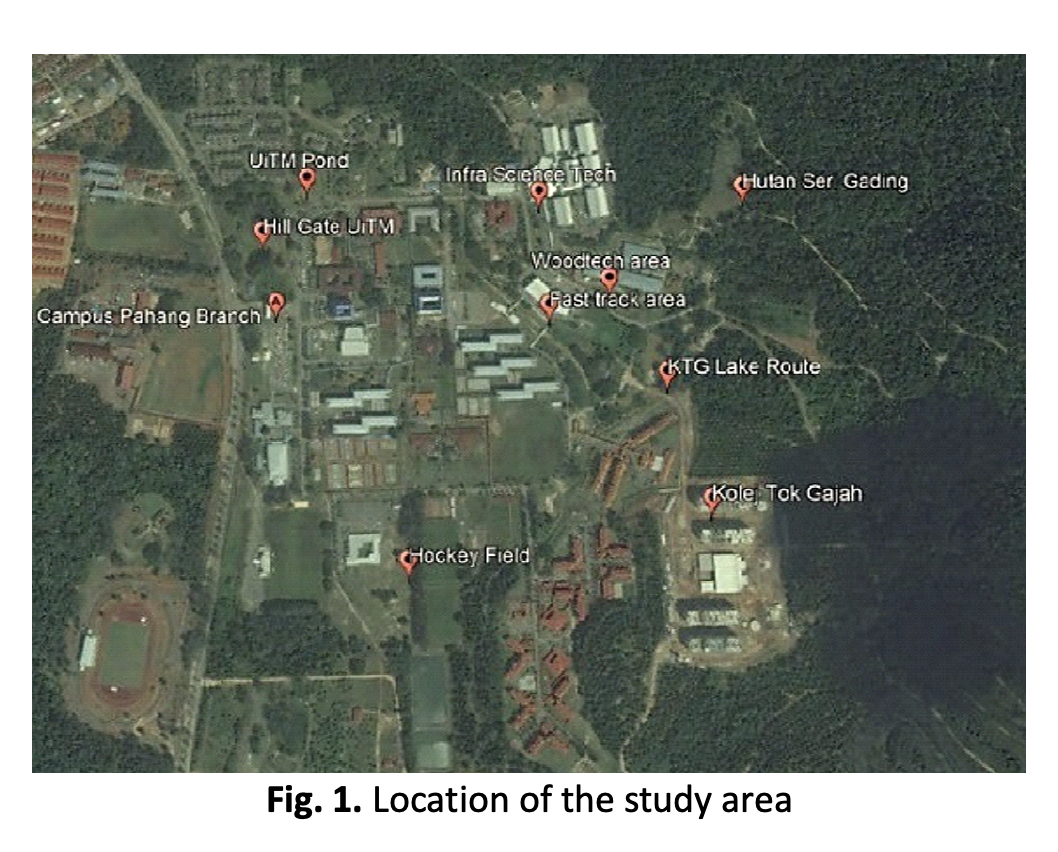
Downloads
Published
2026-07-14
How to Cite
MAD, W. N. F. A. W. M., Wan Saiyyidah Saudah Wan Abdu Malek Al-Hurri, Siti Hawa Shamsudin, Roziana Bujang, & Syarifah Faezah Syed Mohamad. (2026). Termites Diversity at Different Locations of Universiti Teknologi Mara (UiTM) Jengka Campus, Pahang, Malaysia. Semarak International Journal of Animal Sciences and Zoology, 5(1), 1–13. Retrieved from https://semarakilmu.my/index.php/sijasz/article/view/938
Issue
Section
Articles