Analytical Study of Temperature Rise in Cable Sealing End (CSE) Clamps
Keywords:
Cable Sealing End, galvanic corrosion, contact resistance, power loss, thermalAbstract
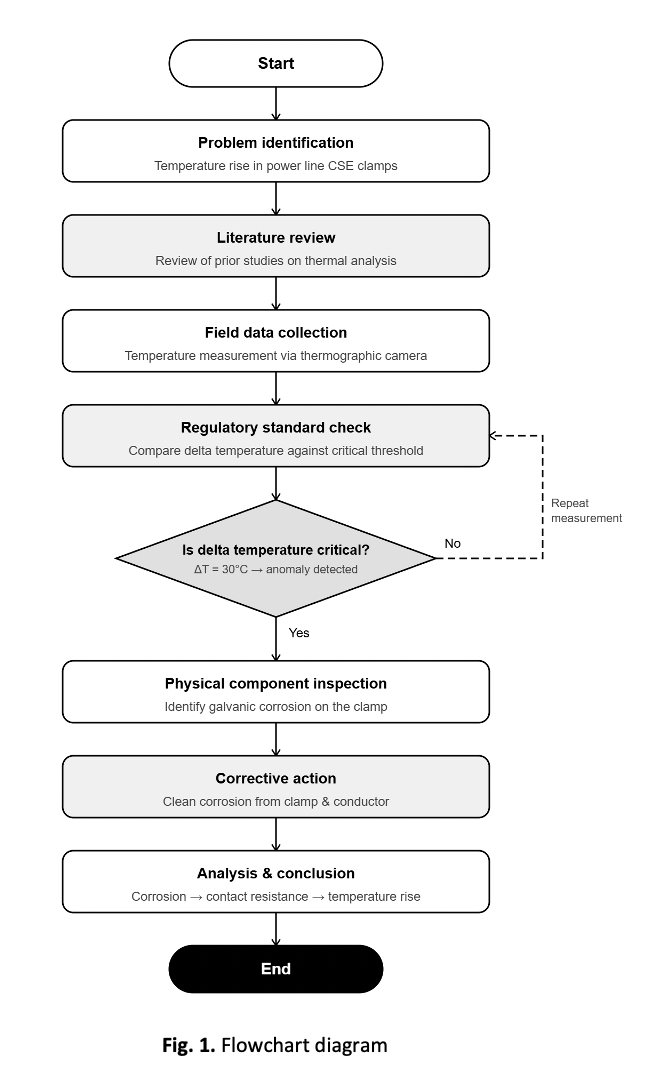
The electric power system relies on high-voltage cable infrastructure in which the Cable Sealing End (CSE) serves as a critical termination component connecting underground cables to high-voltage equipment at substations. A recurring problem observed in this component is overheating at the contact point, threatening system reliability. This study aims to analyse the root cause of temperature rise in the Cable Sealing End Phase "R" at the Extra High Voltage Substation through field-based qualitative analysis using thermographic camera measurements and contact resistance testing, validated against applicable regulatory standards. Field measurements revealed a temperature delta of 30°C at the bushing, exceeding the normal operating limit of 10K, while contact resistance testing yielded 700 µΩ, significantly above the 100 µΩ threshold. Physical inspection confirmed galvanic corrosion between the aluminium conductor and copper terminal, triggered by electrolyte exposure from ambient humidity, which produced a non-conductive oxide layer that increased contact resistance and generated power loss dissipated as excessive thermal energy. Following corrective cleaning of the clamp and conductor, contact resistance was reduced to 60 µΩ within the acceptable limit. It is concluded that galvanic corrosion is the primary cause of elevated contact resistance and temperature rise, which if left unaddressed may progress to arc flash and fire. Regular thermographic inspection and contact resistance testing are strongly recommended as preventive maintenance measures.