Optimization of an Off-Grid Solar Photovoltaic System for Agricultural Irrigation in Bogoran Village, Trenggalek
Keywords:
Off-grid photovoltaic system, Solar water pumping, Agricultural irrigation, HOMER Pro optimization, Battery storageAbstract
Agricultural irrigation requires a reliable energy supply to maintain consistent water availability, particularly in rural areas where renewable energy resources remain underutilized. This study aims to optimize an off-grid solar photovoltaic system to support agricultural irrigation in Bogoran Village, Trenggalek, Indonesia. The study was conducted by modeling the irrigation energy demand of a 550 W water pump and evaluating the local solar energy potential. System configuration was optimized using HOMER Pro by considering photovoltaic generation, battery storage, and a power converter. The resulting configuration was further evaluated through MATLAB simulations under solar irradiance conditions of 1000 W/m², 600 W/m², and 400 W/m², with pump operating durations of 4, 6, and 8 hours per day. The optimization results indicate that the most suitable configuration consists of a 1.50 kW photovoltaic array, nine 1 kWh lead-acid battery units with a total nominal capacity of 9.01 kWh, and a 0.611 kW converter. The system produces 2,371 kWh of photovoltaic energy annually to supply an electrical load of 1,204 kWh/year, achieving a renewable fraction of 100% and an excess electricity fraction of 45.0%. The total net present cost is Rp53,810,930 with a levelized cost of energy of Rp3,456.29/kWh. MATLAB simulations show that longer pump operation increases battery utilization and results in a greater reduction in state of charge, particularly under low irradiance conditions. For 8 hour operation, the minimum battery state of charge is approximately 65%, while shorter operating durations maintain a higher state of charge. These results demonstrate that the optimized off-grid photovoltaic system has the potential to provide a reliable and renewable energy supply for agricultural irrigation while reducing dependence on conventional electricity sources.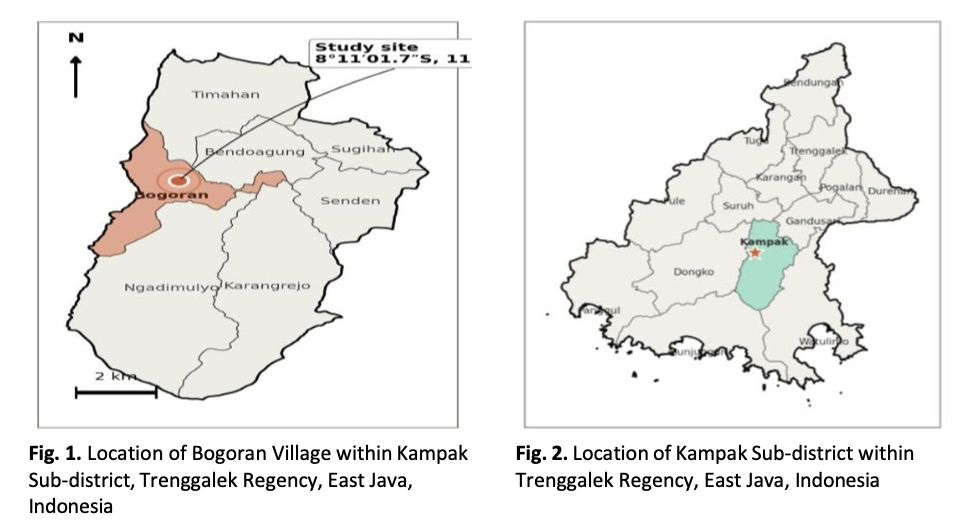
Downloads
Published
2026-10-18
How to Cite
Azmi Fadhal Fauzan, Camilla Izzati Hendarto, Zaskia Putri Ramadhani, Billy Bintang Jatmiko, Andika Agung Cahya, & Misbahul Munir. (2026). Optimization of an Off-Grid Solar Photovoltaic System for Agricultural Irrigation in Bogoran Village, Trenggalek. Semarak International Journal of Agriculture, Forestry and Fisheries , 11(1), 1–17. Retrieved from https://semarakilmu.my/index.php/sijaff/article/view/1249
Issue
Section
Articles