
Geometric Channels Produced By Laser-Selective Thermal Sintering Metal Powder Exhibit Hydraulic Characteristics Using ANSYS Fluent

Authors

  • Obeid Hassoun Department of Electromechanical Engineering, University of Technology – Baghdad, Iraq
  • Alexey Alexandrovich Lopatin Federal State Budgetary Educational Institution of Higher Education «Kazan National Research Technical University named after A.N. Tupolev–KAI», Department of Jet Engines and Power Plants, 420111, Kazan, st. K. Marx, 10. Russian Federation
  • Hussain Abdulaziz Abrahem Department of Electromechanical Engineering, University of Technology – Baghdad, Iraq
  • Rozaliya Al'bertovna Gabdullina Federal State Budgetary Educational Institution of Higher Education «Kazan National Research Technical University named after A.N. Tupolev–KAI», Department of Jet Engines and Power Plants, 420111, Kazan, st. K. Marx, 10. Russian Federation
  • Askar Almazovich Saetgaraev Federal State Budgetary Educational Institution of Higher Education «Kazan National Research Technical University named after A.N. Tupolev–KAI», Department of Jet Engines and Power Plants, 420111, Kazan, st. K. Marx, 10. Russian Federation
  • Aygul' Rafisovna Biktagirova Federal State Budgetary Educational Institution of Higher Education «Kazan National Research Technical University named after A.N. Tupolev–KAI», Department of Jet Engines and Power Plants, 420111, Kazan, st. K. Marx, 10. Russian Federation
  • Alexander Andreevich Terentev Federal State Budgetary Educational Institution of Higher Education «Kazan National Research Technical University named after A.N. Tupolev–KAI», Department of Laser and Additive Technologies, 420111, Kazan, st. K. Marx, 10. Russian Federation

DOI:

https://doi.org/10.37934/sej.11.1.167177

Keywords:

Spatial lattice structure radiator, heat exchange elements and thermal stabilization, hydraulic resistance coefficient

Abstract

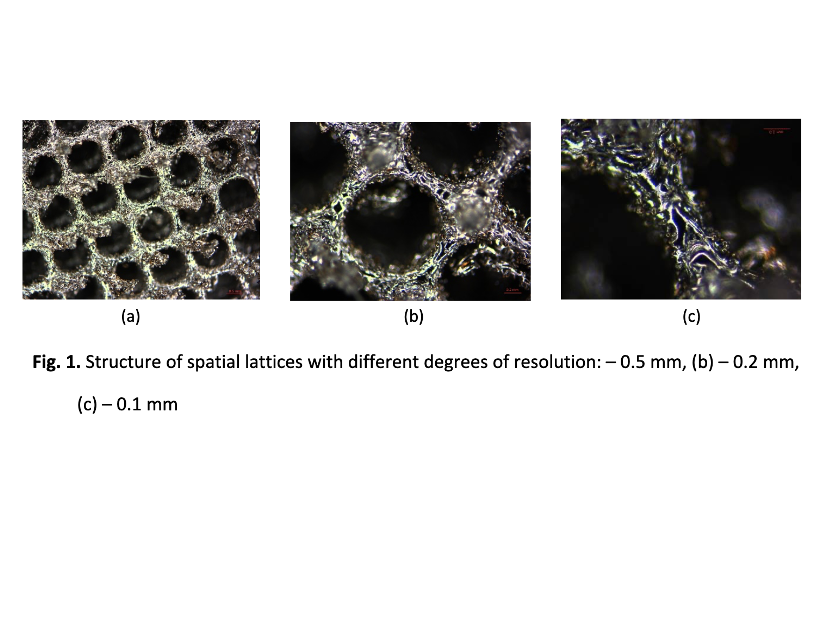
A laser selective sintering of metal powder is used to generate channels with spatial lattice structures, and the study covers the hydraulic features of these channels. Under conditions of increasing heat generation of the current element base, the study use ANSYS Fluent and investigate the challenges of cooling and thermal stabilisation of heat-loaded elements of radio-electronic and electrical power equipment during the course of their investigation. The investigation of porous heat exchange elements and the application of these components with high-tech spatial lattice structures receives a lot of focus and consideration. When it comes to optimising heat transfer and ensuring that constructions have good strength qualities, the utilisation of spatial lattice structures as heat exchange elements is taken into consideration. Radiators that are based on spatial lattice structures have the potential to be used in cooling and thermal stabilisation systems. These radiators offer an excellent mix of hydraulic and heat transmission characteristics, as demonstrated by the findings of the survey.

Downloads

Published

2025-12-25

Issue

Section

Articles