

Experimental Evaluation of a Pilot-Scale Anaerobic Digestion System for Kitchen Waste Management at UTAS Al Mussanah, Oman

Authors

  • K. K. Natarajan Department of Engineering, University of Technology and Applied Sciences, Al Mussanah, Sultanate of Oman
  • B. Vijayaraj Department of Engineering, University of Technology and Applied Sciences, Al Mussanah, Sultanate of Oman
  • Khadersab Adamsab Department of Engineering, University of Technology and Applied Sciences, Al Mussanah, Sultanate of Oman
  • Mohan Chandra Department of Engineering, University of Technology and Applied Sciences, Al Mussanah, Sultanate of Oman
  • Santhosh Sundharesan Department of Engineering, University of Technology and Applied Sciences, Al Mussanah, Sultanate of Oman
  • Eugene V. Vega Department of Engineering, University of Technology and Applied Sciences, Al Mussanah, Sultanate of Oman

DOI:

https://doi.org/10.37934/sej.16.1.222233

Keywords:

Anaerobic digestion, Kitchen-waste management, Pilot-scale biogas digester, Methane production, Seasonal variation, Gas composition, Oman

Abstract

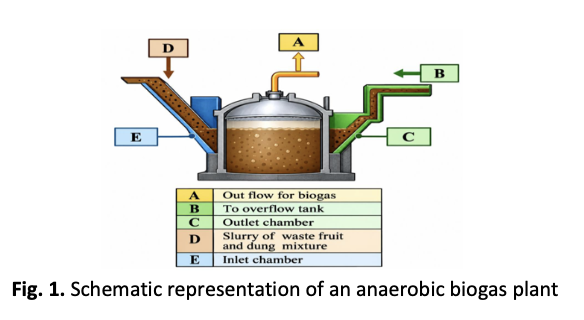
This study presents an experimental investigation of a 1 m³ floating-drum anaerobic digester for treating fruit and vegetable waste at the University of Technology and Applied Sciences (UTAS), Al Mussanah, Oman. The digester was designed to process approximately 3 kg of organic waste per day, with the substrate prepared at a waste-to-water ratio of 1:1. Operating conditions and biogas production were monitored under naturally varying outdoor conditions from January to October 2024. June was designated as a preparation period for the subsequent operating cycle and was therefore excluded from the monthly performance comparison. The mean digester temperature increased from 29.43 °C during January–May to 35.50 °C during July–October. Correspondingly, the calculated mean methane production increased from 99.82 to 130.96 L/day, representing an increase of approximately 31.2%, with the highest reported production of 144.00 L/day recorded in September. The digester maintained relatively stable pH conditions, ranging from 7.05 to 7.24, with an overall mean of approximately 7.15. Meanwhile, the mean hydrogen sulphide concentration increased from 581.97 to 692.20 ppmv, whereas the reported carbon dioxide concentration decreased from 37.95% to 35.98% between the two monitoring periods. These findings indicate seasonal variations in methane production and biogas composition under the prevailing environmental conditions. However, the field-based experimental design does not establish a direct causal relationship between temperature and methane production. Furthermore, the absence of data on feedstock solids content, normalised methane yield, organic loading rate, hydraulic retention time, and measurement uncertainty limits the assessment of conversion efficiency and commercial feasibility. Overall, this study provides a site-specific, pilot-scale evaluation of anaerobic digestion for organic waste management in Oman and highlights the additional operational and performance measurements required to support a more comprehensive assessment of system efficiency, reliability, and practical applicability.

Author Biography

K. K. Natarajan, Department of Engineering, University of Technology and Applied Sciences, Al Mussanah, Sultanate of Oman

Karamora.KK@utas.edu.om

Downloads

Published

2026-11-01

Issue

Section

Articles