
Engineering Management of Green Campus Infrastructure and Climate Education in Indonesian Higher Education

Authors

  • Hadi Suwono Department of Biology, Faculty of Mathematics and Natural Sciences, State University of Malang, 65145 Malang, Indonesia
  • Marsya Aulia Rizkita Applied Marketing Management, Faculty of Vocational Studies, State University of Malang, 65145 Malang, Indonesia
  • Devi Mariya Sulfa Department of Biology, Faculty of Mathematics and Natural Sciences, State University of Malang, 65145 Malang, Indonesia
  • Chun-Yen Chang Department of Earth Sciences, National Taiwan Normal University, 88, Section 4, TingJou Rd., Taipei City, 116, Taiwan
  • Chokchai Yuenyong Science Education Program, Faculty of Education, Khon Kaen University, Khon Kaen 40002, Thailand

DOI:

https://doi.org/10.37934/sej.16.1.197221

Keywords:

Sustainability Education, Climate Change Integration, Higher Education Policy, Green Campus Infrastructure, Multi-Sector Collaboration

Abstract

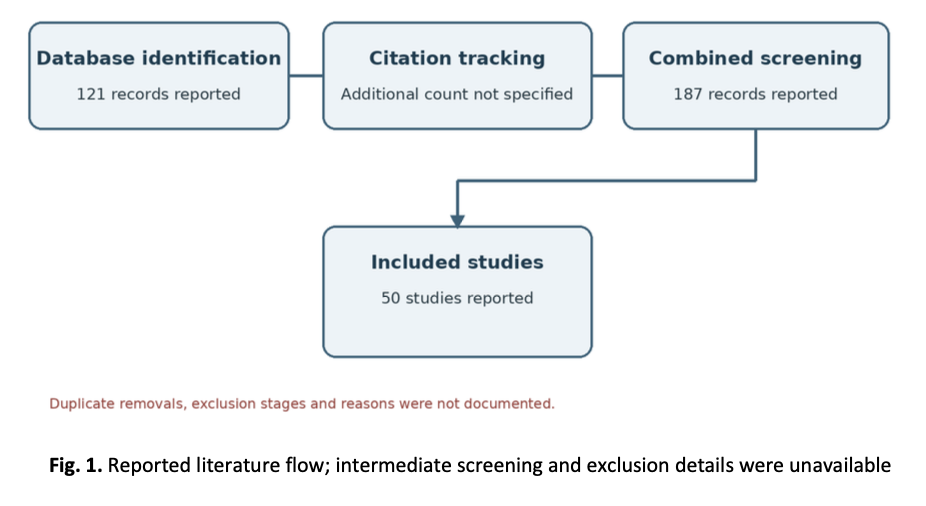
Indonesian universities face a coupled implementation problem: climate policies and sustainability education are expanding, yet campus infrastructure is rarely monitored to verify environmental performance. This study develops an engineering management framework for connecting institutional decisions, multi-sector delivery, green campus assets, and climate change education. A review of 50 studies was integrated with surveys and interviews involving 131 participants at 12 state-university science teacher education faculties (12 leaders, 39 lecturers, and 80 pre-service teachers). In the reviewed set, 25/50 studies described green campus programs and 28/50 examined partnerships; these are frequencies of publication themes, not measured intervention effects. Leaders rated SDG-aligned strategy at 4.0 but learning resources at 3.3 and innovation incentives at 3.2; lecturers rated responsibility for climate education at 4.6 but training at 3.6; students rated readiness at 4.4 but confidence in explaining climate concepts at 3.64. These descriptive gaps identify execution constraints. The proposed stage-gated framework assigns an asset owner and external partners, records baselines, prioritizes projects based on cost and performance criteria, and verifies energy, water, waste, and emissions outcomes before operational data is used in teaching. No campus meter, cost, or emissions dataset was collected; therefore, infrastructure savings and causal effects cannot be estimated. The framework offers a reproducible measurement and governance protocol for a prospective campus pilot.

Author Biographies

Hadi Suwono, Department of Biology, Faculty of Mathematics and Natural Sciences, State University of Malang, 65145 Malang, Indonesia

hadi.suwono.fmipa@um.ac.id

Marsya Aulia Rizkita, Applied Marketing Management, Faculty of Vocational Studies, State University of Malang, 65145 Malang, Indonesia

marsyaauliarr.fv@um.ac.id

Devi Mariya Sulfa, Department of Biology, Faculty of Mathematics and Natural Sciences, State University of Malang, 65145 Malang, Indonesia

devi.mariya.2103418@students.um.ac.id

Chun-Yen Chang, Department of Earth Sciences, National Taiwan Normal University, 88, Section 4, TingJou Rd., Taipei City, 116, Taiwan

changcy@ntnu.edu.tw

Chokchai Yuenyong, Science Education Program, Faculty of Education, Khon Kaen University, Khon Kaen 40002, Thailand

ychok@kku.ac.th

Downloads

Published

2026-10-27

Issue

Section

Articles