Enhancing Infant Pain Cue Recognition based on Preprocessing Combination Method under Varying Noise Conditions
DOI:
https://doi.org/10.37934/sej.16.1.172196Keywords:
Infant Pain, Preprocessing, NoiseAbstract
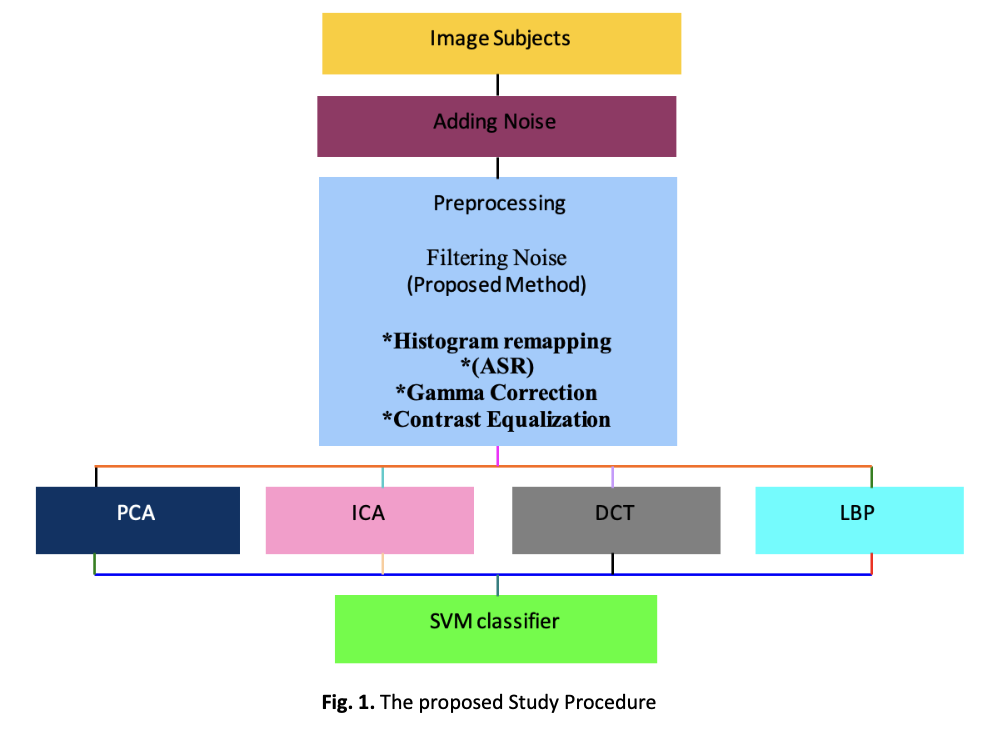
Pain can be conveyed through verbal communication or patient self-report. Nonetheless, assessing pain in infants and patients who cannot communicate verbally (such as the mute, mentally challenged, or those requiring assisted breathing) can be challenging. Despite these circumstances, only an experienced medical examiner may comprehend their non-verbal signs of pain. Moreover, pain can be troublesome at varying levels of noise. At times, even an experienced pediatrician may make an error in their assessment or overlook a minor change in an infant's face. Even when they are present, it appears challenging to recognize the subtle anxiety in the facial twitch. To address this obstacle, an automated method for assessing infant pain through facial-cue analysis is proposed. The T-test results validated the relationships among the new combinations generated by this algorithm. Ultimately, a feature fusion approach combining Principal Component Analysis (PCA), Discrete Cosine Transform (DCT) coefficients, and Local Binary Patterns (LBP) was employed. The effectiveness of the complete features descriptor and the suggested preprocessing technique was evaluated against other well-known preprocessing methods using Support Vector Machine (SVM) classifiers at various noise levels.