Topography-Informed Techno-Economic Sizing of Hybrid PV-Battery Systems for MSMEs in East Java: A Comparative Solar-Resource and Productive-Load Assessment
DOI:
https://doi.org/10.37934/sej.15.1.149171Keywords:
Battery energy storage, demand-side flexibility, Global Solar Atlas, hybrid renewable energy, MSMEs, techno-economic optimizationAbstract
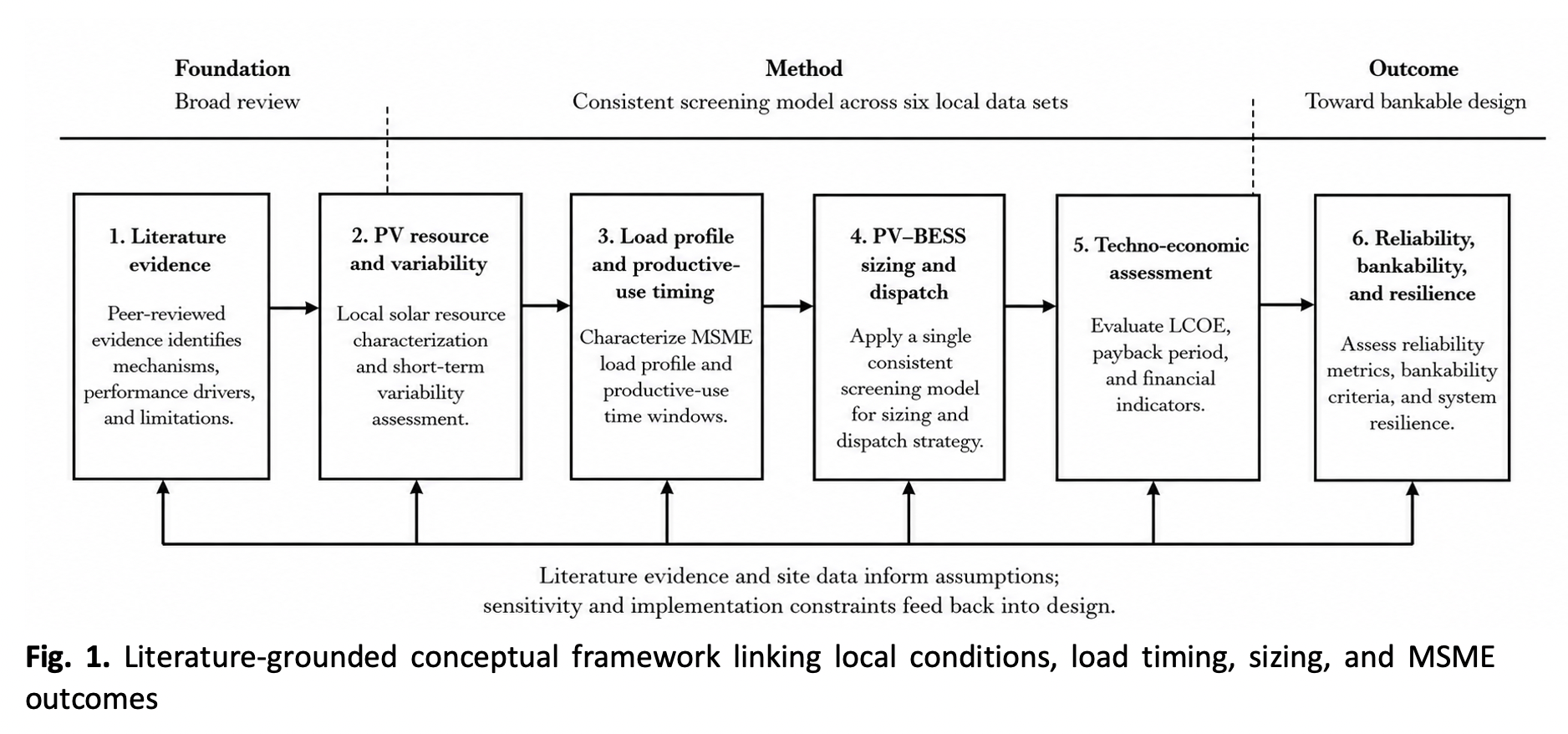
Battery size was more sensitive to when micro, small, and medium enterprises (MSMEs) use electricity than to which of the six nearby East Java cities they are located in. This study develops a reproducible pre-feasibility framework for Madiun, Jember, Bangkalan, Lamongan, Surabaya, and Malang by linking a protocol-based structured narrative review with Global Solar Atlas data, reconstructed hourly PV profiles, a representative 60 kWh/day productive load, chronological PV-battery dispatch, exhaustive capacity search, life-cycle costing, and sensitivity analysis. Under a renewable-fraction constraint of at least 90%, five sites selected a 16 kWp PV/25 kWh battery, while lower-yield Bangkalan required 17 kWp PV. The central finding was operational: shifting 8 kWh/day (13.3% of demand) from evening to solar hours reduced the optimal battery size from 25 to 20 kWh and lowered the levelized cost by about 10%, whereas the inter-city solar resource spread changed the optimal PV array by only 1 kWp. Thus, demand chronology can provide greater design leverage than modest geographic resource differences. Because solar profiles were modeled and reconstructed, weather was deterministic, and one generic load was used, the results are screening decision rules rather than procurement specifications.