

Bridging the Gap Between Vehicles and Infrastructure for Enhanced Communication and Mobility: Comprehensive Study

Authors

  • Hussein K. Abdul Atheem Computer Science Department, University of Technology, Baghdad, Iraq
  • Israa T. Ali Computer Science Department, University of Technology, Baghdad, Iraq
  • Faiz A. Al Alawy College of Engineering, Kent State University, Ohio, USA

DOI:

https://doi.org/10.37934/sej.13.1.190198

Keywords:

VANET, V2V, V2I, Mobility, Intelligent Transport Systems (ITS)

Abstract

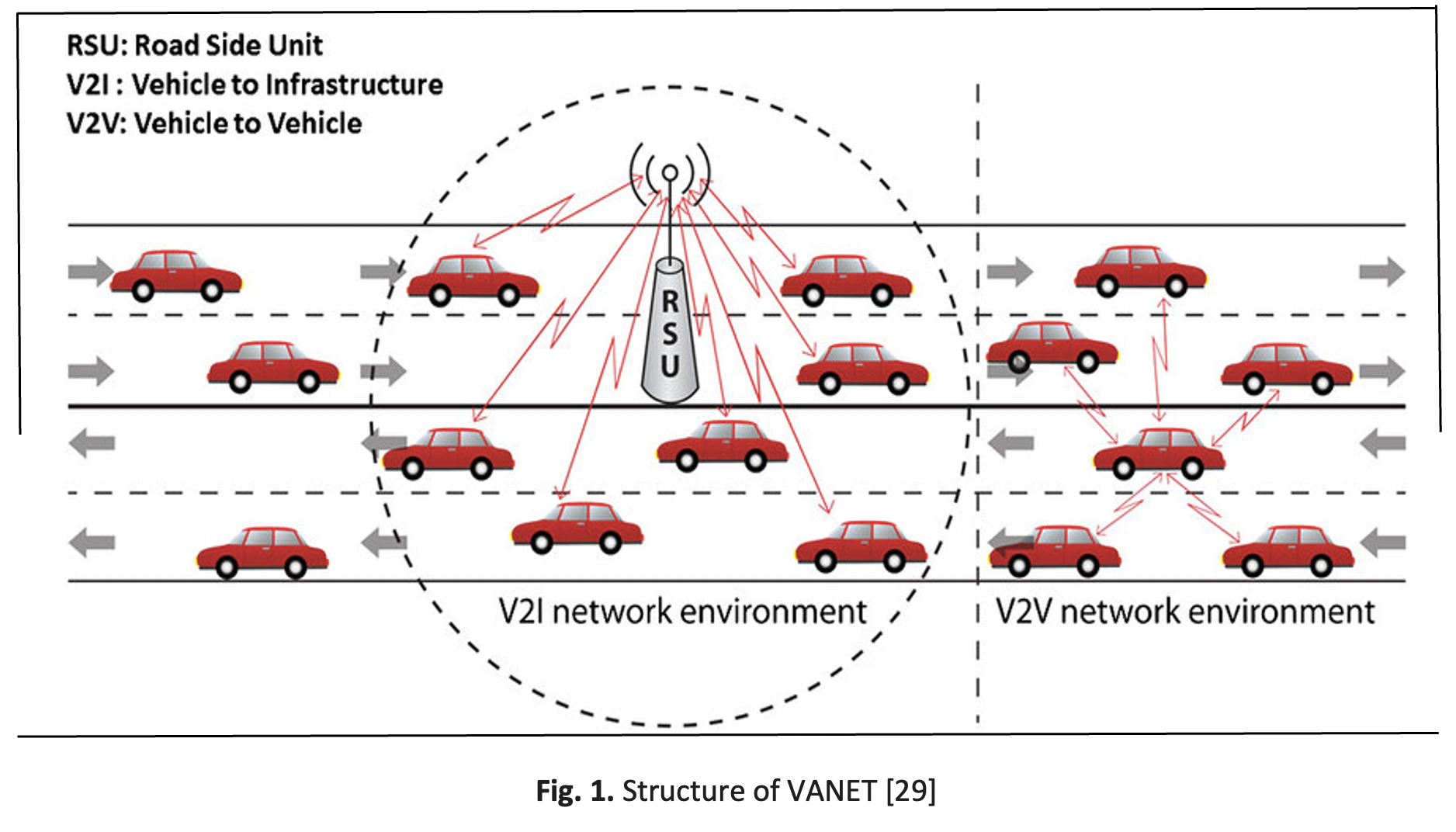
Vehicular Ad-hoc Networks (VANETs) present a transformative model for mobility and communication within transportation systems. This study explores the VANETs pivotal role bridging the gap between infrastructure and vehicles to simplify solutions for communication and mobility. The VANETs core rest of in their capability to build dynamic communication links between roadside infrastructure and vehicles, encourage real-time data collaboration and exchange. Communication protocols of Vehicle-to-Infrastructure(V2I) and Vehicle-to-Vehicle (V2V), shape the backbone of this interconnected network, allowing an applications wide array aimed at enhancing efficiency, convenience and safety on the roads. This article explaining the major elements of VANET communication, also this study explores the use of dedicated short-range communication (DSRC), cellular networks, bandwidth utilization and protocols of ad-hoc networking to enhance the reliability of communication. In addition, it checks emerging technologies such as algorithms of machine learning and edge computing to improve abilities of data processing and allow intelligent decision-making in VANET environments. improved communication abilities within VANETs ease the advanced mobility solutions implementation, including systems for dynamic traffic management, predictive analytics for congestion mitigation and systems for cooperative collision avoidance. VANETs enable infrastructure and vehicles via using collaborative decision-making and real-time data exchange, to reply dynamically to changing traffic conditions, overall enhancing traffic safety and flow. Furthermore, the article explains the VANETs integration with emerging transportation trends like autonomous and connected vehicles (ACVs) and pointing to the synergies between these technologies in enabling safer and efficient mobility solutions. Via leveraging VANETs to ease communication and coordination among (AVCs) infrastructure, it can unlock the full potential of autonomous driving and usher in a new era of transportation. Drawing facts from effective VANET deployment initiatives around the world, including Smart Mobility Testbeds, Cooperative Intelligent Transport Systems (C-ITS), this study emphasizes the transformative factor of VANETs in reshaping of urban mobility. Via bridging the gap between infrastructure and vehicles, VANETs put the base for a future where transportation is not only secure and effective but also more inclusive and sustainable for all road users.

Author Biography

Israa T. Ali, Computer Science Department, University of Technology, Baghdad, Iraq

10105@uotechnology.edu.iq

Downloads

Published

2026-04-15

Issue

Section

Articles