A Comprehensive Systematic Review of Reflection Intelligent Surfaces (RIS) in Free-Space Optical (FSO) Systems: Atmospheric Impacts and Advanced Communication Strategies
DOI:
https://doi.org/10.37934/sej.13.1.6886Keywords:
Free Space Optic (FSO), Reflection Intelligent Surface (RIS), Weather, Atmospheric Communication SystemAbstract
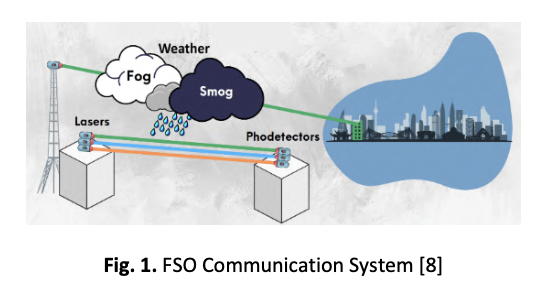
ree Space Optic (FSO) communication systems offer high data rates and cost efficiency. Nevertheless, their performance is significantly hindered by adverse weather conditions like fog, rain, and snow, which result in scattering, absorption, and attenuation of optical signals. To address these challenges, integrating Reflection Intelligent Surface (RIS) technology is seen as a promising solution to enhance the performance and reliability of FSO systems. This review focuses on the impact of weather conditions on RIS-assisted FSO communication systems, using a comprehensive analysis based on the Preferred Reporting Items for Systematic Reviews and Meta-Analysis (PRISMA) framework. Scholarly articles from Scopus, Web of Science (WoS), and Institute of Electrical and Electronics Engineers (IEEE), published between 2024 and 2026, were analysed, yielding 34 relevant studies. The findings were organised into three key themes: (1) RIS in FSO systems, (2) Effects of Atmospheric and Environmental Conditions on RIS and FSO Systems, and (3) Advanced Communication Strategies in Optical Networks. The analysis highlights that RIS technology can mitigate some of the detrimental effects of weather on FSO systems by dynamically adjusting the phase and direction of optical signals, improving Signal-to-Noise Ratio (SNR), Bit Error Rate (BER), and data throughput under moderate weather conditions. However, extreme weather events still present significant challenges that RIS alone cannot fully overcome. In conclusion, while RIS significantly enhances FSO system performance in mild-to-moderate weather conditions, extreme conditions necessitate further research into innovative designs and adaptive control mechanisms that can provide robust communication across all weather scenarios.