Novel Hyperparameter Optimization for an SVM-based CO2/CH4 Hydrate Equilibrium Conditions for Ammonium-based Ionic Liquids
DOI:
https://doi.org/10.37934/sej.14.1.103112Keywords:
Ammonium-based ionic liquids, hydrate inhibition, hyperparameter optimization, support vector machine modelAbstract
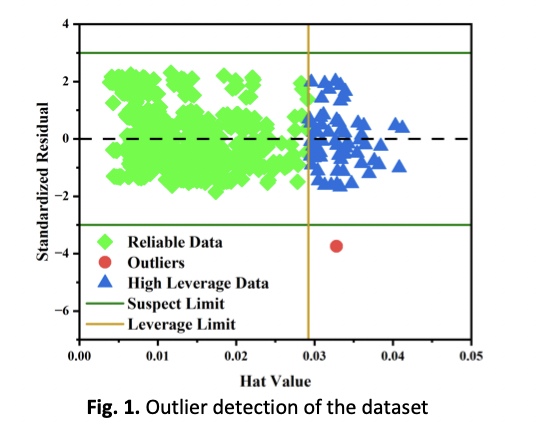
Gas hydrates are reservoirs of CO2, CH4, and other gases, found in seabed subsurface sediments, in permafrost regions and in deep freshwater lakes. These gases can be transported using hydrate technologies. However, when gas is transported through oil and gas pipelines, the formation of gas hydrates inside the pipelines causes blockage of the pipelines, damages the pipelines, and sometimes causes loss of life. Several hydrate mitigation methods exist, and chemical inhibition has gained significant attention. Ammonium-based ionic liquids have received considerable attention as chemical inhibitors because of their eco-friendliness, low volatility, and reusability. However, these experimental methods are time-consuming and expensive. Hence, machine learning model building is the best and most suitable complement to experimental work for gas hydrate inhibition. A support vector machine (SVM) learning model was built with and without hyperparameter optimization for CO2/CH4 gas hydrate inhibition using ammonium-based ionic liquids (AILs). The data were collected from the literature and thermodynamic models. Outliers were removed from the data. The models were trained and tested using a 70:30 ratio. The model performance was analyzed using experimental versus predicted temperature, residual analysis, cumulative probability plot, and error analysis metrics and unseen data. It was concluded that SVM model hyperparameter optimization is a necessary for CO2/CH4 hydrate inhibition using AILs.