Seating Arrangement and Students’ Behaviour in the Language Classroom: A Qualitative Case Study in Higher Education in Malaysia
Keywords:
Communication, motivation, engagement, learningAbstract
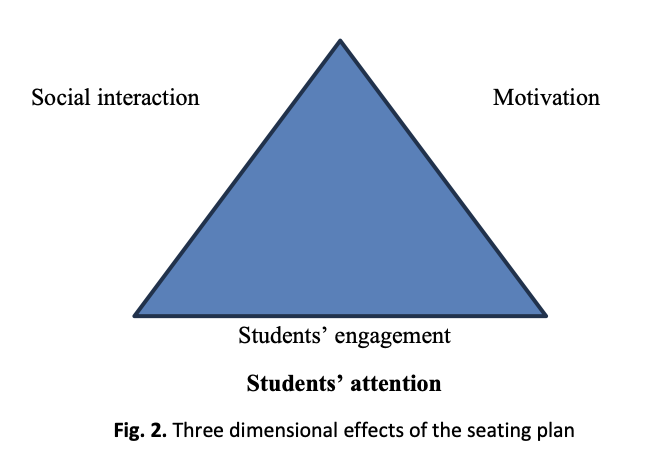
This study was conducted at a higher educational institution in Malaysia. The purpose was to observe how seating arrangement influences the learning behaviour of students. The students were taught in modern and traditional classrooms. The research design was qualitative in nature; semi structured interviews and class observations were conducted. The students received language instruction in rooms with different seating arrangements. The findings indicated that in the modern classroom students enjoyed learning a language owing to factors such as round tables seating arrangement, multimedia facilities, less proximity with the instructor, creativity and amicable class environment. These factors resulted in improved motivation and engagement in class activities, heightened confidence, less shyness, courage to ask questions, peer correction, attentive students’ behaviour and more focused approach to accomplish the tasks. However, the traditional classroom with linear seating arrangement created problems for the students such as less visibility, proximity between the instructor and students and shyness to ask questions and lack of free movement.