Sustainability of Chemically Treated Waste-Derived Adsorbents for Dye Removal: A Review
Keywords:
Sustainability, chemically treated adsorbents, dye removalAbstract
Activated carbon is widely used in industrial wastewater treatment due to its high efficiency. However, it is costly and typically derived from non-renewable sources. This has led to growing interest in the utilisation of waste-derived adsorbents as a more sustainable alternative for wastewater treatment, particularly for organic pollutants such as dyes. Early studies explored the applications of waste materials without any chemical modifications. However, such approaches resulted in low adsorption performances and potentially secondary pollution, such as high chemical oxygen demand and biological oxygen demand in treated effluent. While numerous studies have demonstrated that chemical treatment can significantly enhance the performance of waste-derived adsorbents, a comprehensive evaluation of their sustainability remains limited. This review critically examines recent advances in waste-based adsorbents, with a particular focus on the role of chemical treatment methods, including acid and alkali treatments, in improving adsorption capacity and selectivity. The sustainability of chemically treated adsorbents is assessed by considering key factors, such as raw material availability, chemical consumption, regeneration potential, and environmental implications associated with the preparation and use of the adsorbent. Additionally, the review examines the trade-offs between enhanced adsorption performance and the environmental impacts associated with chemical modification. Current challenges, knowledge gaps, and future research directions are highlighted, emphasising the development of balanced and environmentally responsible treatment strategies. This review aims to guide the rational design of sustainable waste-derived adsorbents for practical wastewater treatment applications.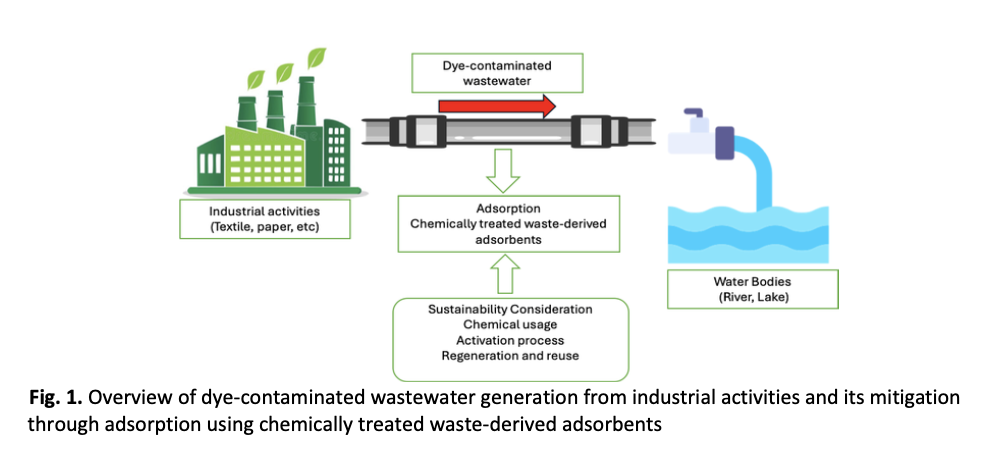
Downloads
Published
2026-04-20
How to Cite
Saad, S. A., Md. Isa, K., Derman, M. N., Kasim, F. H., Ibrahim, N., & Abd. Aziz, M. A. (2026). Sustainability of Chemically Treated Waste-Derived Adsorbents for Dye Removal: A Review. Semarak International Journal of Chemical Process Engineering, 6(1), 1–9. Retrieved from http://semarakilmu.my/index.php/sijcpe/article/view/1047
Issue
Section
Articles