Leveraging Data Mining Techniques for Green Skill Development in TVET Curricula
Keywords:
Data mining, green skills, curriculum development, sustainability policies, TVET, Natural Language ProcessingAbstract
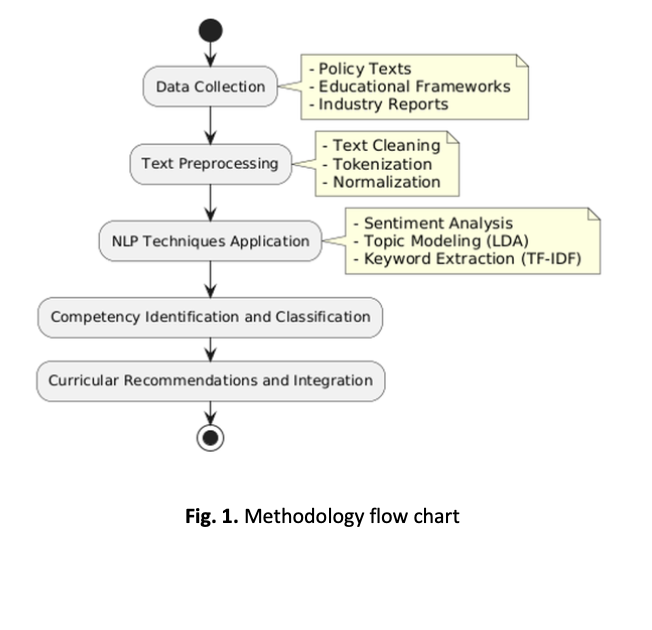
The global transition toward sustainability requires a workforce equipped with specialised green skills, particularly within Malaysia’s Technical and Vocational Education and Training (TVET) ecosystem, which includes Community Colleges, Polytechnics, Kolej Vokasional (KV), and institutions under the Malaysian Technical University Network (MTUN). However, existing curricula across these institutions often lag behind the evolving demands of green industries aligned with the Sustainable Development Goals (SDGs). This study employs a qualitative research approach, utilising Educational Data Mining (EDM) techniques, specifically Natural Language Processing (NLP), to systematically analyse a comprehensive body of sustainability-related textual data from policy documents, TVET frameworks, and industry reports. Using sentiment analysis, topic modelling, and keyword extraction, the study identifies and classifies essential green competencies demanded by industry. These include renewable energy systems, energy efficiency management, circular economy practices, sustainable resource management, and environmental compliance. The findings strongly align with SDG 4 (Quality Education), SDG 7 (Affordable and Clean Energy), SDG 9 (Industry, Innovation, and Infrastructure), and SDG 13 (Climate Action). The research underscores the importance of embedding data-driven curriculum design approaches across all tiers of TVET and recommends institutional collaboration, continuous capacity building, and proactive curriculum updates to ensure workforce readiness for sustainable economic transformation.